Thursday, November 17, 2022

"The Bach of Rock": Professor Longhair’s Virtuosic Genius

 "The Bach of Rock": Professor Longhair’s Virtuosic Genius

How Roy “Professor Longhair” Byrd’s individualistic and experimental piano-playing style revolutionized the New Orleans music scene and paved the way for rock and soul.
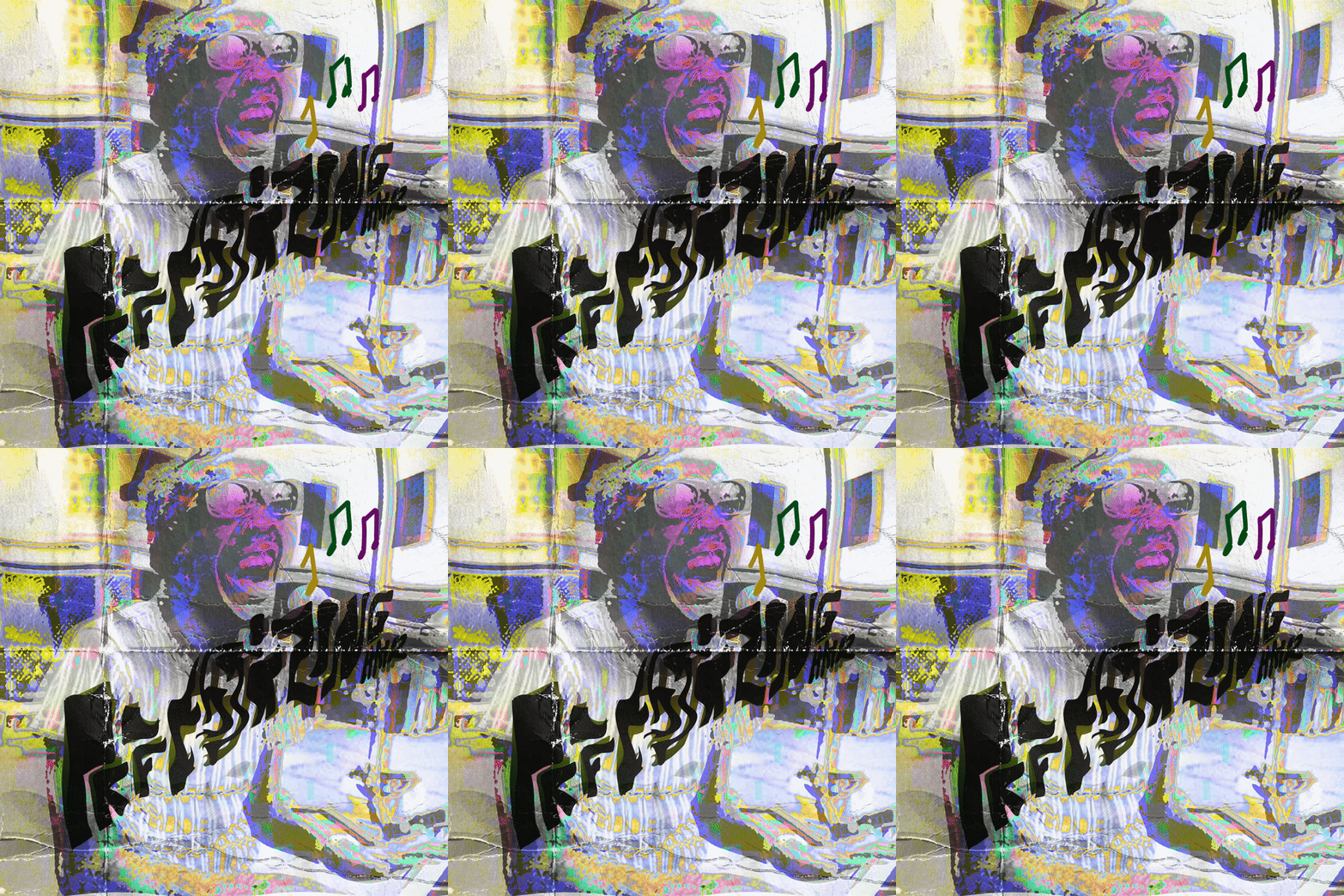
Illustrated by Krista McLeod

Musical instruments are not merely noise-making machines: They are conduits into dimensions of musicians’ souls. For many musicians, words fail to express the deeper essence of who they are. Only through art can they directly communicate the complexity of their souls and the emotions they experience. When accomplished musicians play their instruments, they pour out their passions, desires, and fears in front of you. By the end of their performance, they have nothing left to say: They’ve expressed all they possibly could about themselves.

This is what places Roy “Professor Longhair” Byrd, “the Bach of Rock” of New Orleans, among the greatest musicians of his time. Listen to any three-second snippet of him playing piano, and you’ll know it’s him: He combined boogie-woogie, calypso, mambo, and rhumba to create a funky and original style. His performances ooze with jubilation, immediately transporting you into the heart of New Orleans’ vibrant culture. Yet, his experimental style always feels like a natural expression of who he was. When asked about his career, he simply said, “I didn’t know what I was playing, but it sounded good to me.” No wonder that despite his influence on future piano players like Fats Domino, Allen Toussaint, and Randy Newman, none of them could recreate his personalized magic.

Such extraordinary talent can only come through special circumstances. The legend goes that Longhair learned how to play on a beaten-down piano with missing keys he found in an alley, and after performing alongside local players, Longhair was able to develop his distinctive style. His songs would never be simplistic topsy-turvy grooves. Instead, the Louisiana native threw in sudden glissandos, tricky funky rhythms, and random time signature changes to keep you on your toes. He would perform a piano acrobatic show right in front of your eyes. At Longhair’s best, his songs would tell a story, each phrase conveying a different “micro-emotion” that the protagonist (generally himself) feels. As he grew older and gained more jazz influence, his performances only became more elegantly woven tapestries.

However, before exploring his technical performing peak, we need to read the Professor’s textbook: a compilation of his early singles. The issue is that Longhair performed for multiple labels in the 1940s to ‘50s, so there aren’t many compilations that put all his classics in one place. Luckily, he performed quite a bit of material for the Atlantic label, resulting in his most famous singles and eventually the New Orleans Piano compilation. Distill it down to its core songs, and we’re left with some of the highest peaks of New Orleans R&B: “Hey Now Baby,” “Tipitina,” “Hey Little Girl,” and “Mardi Gras In New Orleans.” Each one displays his performing brilliance and his expansive emotional range. These hits are not just songs: they let you step into his mesmerizing musical universe.
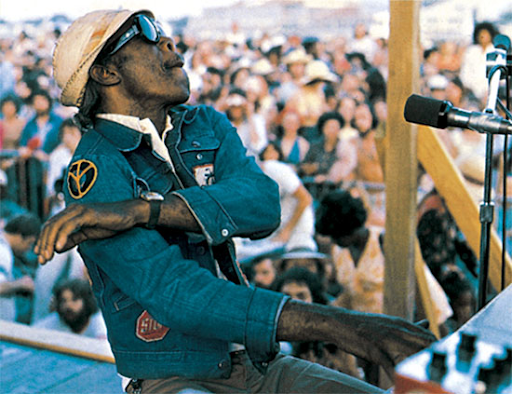
Photo courtesy of Alligator Records

“Hey Little Girl” thrusts you into that world immediately, telling the story of Longhair failing to seduce a girl at a bar. You can tell he has had a bit too much to drink by that gutsy, wobbly bassline, almost as if he was tripping with every step. This heaviness is countered with lighter, graceful melody lines that portray his charming, seductive personality. These contrasting elements would sound rather ordinary on their own, but when juxtaposed, they set the stage for Longhair’s tale, where he tries his best to woo the girl but is way too drunk to do so and keeps on fumbling. Each stumble is displayed by the heavy bassline crashing into the lighter main melody, and the climax of his struggle to appear sober comes during the “look what you’re gonna miss” solo, where the heavy and light lines almost brawl against each other. “Hey Little Girl” is a perfect example of Professor Longhair’s narrative genius — his stories are told through all aspects of his music, not just lyrically.

The light, airy elegance of “Hey Now Baby” is the perfect foil to the heavy, earthy grime of “Hey Little Girl.” While the latter was set in a murky tavern, “Hey Now Baby” instead takes place in an elaborate ballroom with an air of sophistication. It’s mind-blowing how perfectly the main melody describes the graceful dance of an elegant ballerina, the riff containing a complex burst of notes within an orderly rhythmic structure. Meanwhile, Longhair’s gruff voice provides a much-needed contrast, highlighting the rift between his rowdy, rough persona and the much classier ladies at this ballroom.

Professor Longhair’s voice is hardly the only way he expresses himself. “Tipitina” exemplifies the epic intros he would eventually perfect. The piano lead lines ebb and flow, turning from playful to moody in a moment’s flash. Even when the vocals begin, he adds small variations to each repetition of the melody to keep it interesting. On his dance tracks like “Ball The Wall” and “In The Night,” he can use his piano to not only provide an exuberant rhythmic backing but actually amplify the wild energy.
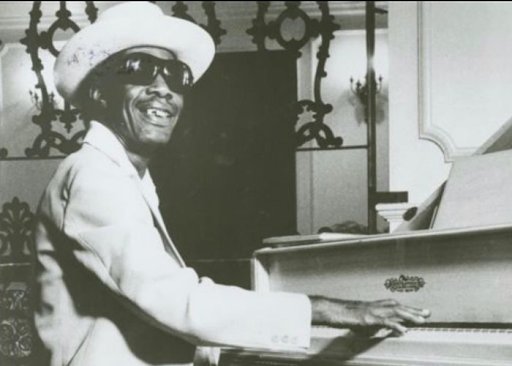
Photo courtesy of The 100 Companies LLC

The culmination of his talents is found in his most iconic song, “Mardi Gras In New Orleans.” This song is not simply the anthem of the Mardi Gras festival in New Orleans: it is a celebration of life. That danceable bassline is one of the most exhilarating beats you’ll ever hear, and combined with the steady counterpoint rhythm, it perfectly embodies the Mardi Gras parade. Yet, this is his most personal song as he describes the experience of seeing the festival for the first time with child-like wonder and awe, making its ecstatic nature deeply intimate. It is not just a routine party tune; it is a cathartic expression of joy and excitement.

With greatness abound in these masterpieces, one would think he would be more well-known. Sadly, his style was simply too daring for contemporary white audiences, and while New Orleans artists like Fats Domino, Larry Williams, and Lloyd Price attained commercial success, Longhair could only dream of having the same appeal. This is partially the reason he became disillusioned with the music industry and quit in the 1960s.

Luckily, great art always survives, and he regained prominence after performing at the 1971 New Orleans Jazz and Heritage Festival, sparking his return to live performing. On his new studio albums Rock N’ Roll Gumbo and Crawfish Fiesta, the seeds of his musical vision finally sprouted. His complex style only became more intricate and memorable on those records, and they hold the re-recorded, definitive versions of “Big Chief,” “Tipitina,” and “Hey Now Baby.” He was even able to Longhairify other genres, like honky-tonk country, rock, blues, and soul, showing how far his vision could reach.

Even if Longhair did not get the full recognition he deserved, his innovations have influenced generations of musicians, recognized universally as the singularity in popular music who always stayed true to his style. His unique style of musical storytelling sounds just as fresh and powerful as it did in the ‘40s and ‘50s, and the history of rock and soul music would look much different without their ancestry containing a bit of Longhair. So, pay a tribute to this forgotten genius by playing “Mardi Gras In New Orleans” at full blast and let that excitement reverberate within your soul. “The Bach of Rock” deserves no less.

Song of the Day #13: I'm Gonna Be A Wheel Someday - Fats Domino

 I'm Gonna Be A Wheel Someday - Fats Domino

Song of the Day #13


Spotify link: https://open.spotify.com/track/0Hbptzrke8uM1IfDdWO5wp?si=ceb845e3c41f483f

If you asked me before I heard this song that "would Fats be successful without his piano and horn arrangements?" My answer would be a resounding "no." It's clear that the focal point of his appeal resided in the New Orleans atmosphere brewed by his expressive playing style and thick, heavy arrangements. Yet, the true secret to his magic actually lies in the sheer number of great vocal hooks that are present in his songs. "Please Don't Leave Me?" "Ain't That A Shame?" "Blue Monday?" "I'm Walkin?" "Whole Lotta Loving?" "I'm Ready?" Practically ALL of these manage to capture a memorable vocal melody delivered with his charming personality, and it's hard to imagine him attaining dozens of hit singles without the songwriting giftedness of Fats and Dave Bartholomew.

So, it was easily possible for him to make great music without his typical instrumentation, and "I'm Gonna Be A Wheel Someday" is one of his most successful forays into new musical territory. I didn't like it much at first, but I just had to adjust to the change in style: it's hard to not love those "HEYs" that kick off one of his most entertaining speedy rockers. The way he subtly modulates his voice on the main chorus truly makes the song. The melody itself is absolutely invigorating, but those little emphases on "I'm gonna be a WHEEL someday, I'm gonna be someBODY, I'm gonna be a REAL gone cat" gives the song the necessary jolts it needs to lock into full overdrive. It is lighter and airier than you expect from their regularly hefty sound, but the energy, tightness, and scratchy guitar riff allow the song to stand its ground against Domino's long series of classics. So even though I lament the lack of piano (though here is a good live piano-driven version), this is one hell of a kickass song. Who could play as fast as this back then?

Tuesday, November 15, 2022

Song of the Day #12: You Can Call Me Al - Paul Simon

 You Can Call Me Al - Paul Simon

Song of the Day #12


Apple Music link: https://music.apple.com/us/album/you-can-call-me-al/581741456?i=581741462


It warms my heart to know that this is the most popular song of his whole career. Sure, many fans would hesitate to put it among his best, but it's absolutely pivotal in Paul Simon's catalog, orienting the spiritual purpose of Graceland. Of course, any song that speaks of redemption through the glow of the human spirit will always score points with me. Yet, this song is even more beautiful to me because it is about Paul Simon's emerging through his personal crisis by an awakening of his soul. His declining commercial success, failing marriage, and waning creative energy all thrusted Paul Simon into one of his worst periods. As it goes with personal crises though, it forces you to re-evaluate your purpose in life, and, with time, a rebirth comes. 

The lyrics perfectly document the aimlessness he felt and the paranoia that music helped him overcome. He comes up with all kinds of fears and worst-case scenarios that all seemingly melt away by the grand elation he felt from appreciating the music of South Africa, almost revitalizing his will for life. Truly, this is probably the most upbeat and energetic he's ever been. Throughout his all career, we could only interact with Simon through his own personal world. For the first time, he has opened his heart to the world and is able to celebrate everything he finds wonderful about it. That triumphant riff and danceable bassline signal a whole new beginning for him. That's why this song is so damn uplifting: you are witnessing a man heal himself in musical form and telling you about what he found in the process.

And even if you ignore any of the depth of the song (which many people do, unfortunately), this song is still impossibly catchy. Unbeatable hooks (there are at least 3 great ones here!), perfectly produced, truly shattering bass runs, and a complex but accessible Afro-Caribbean polyrhythmic structure. In the synth-drench sterilized wasteland of 80s pop, an album like Graceland with its vital, powerful African influences and abundance of creativity was an oasis. Yet, the album wouldn't have half of the appeal without its soulful optimism and universalism, and this song shows you how he stumbled upon that spirit in the first place.

And if you haven't watched the music video with Chevy Chase, it's hilariously awesome. You gotta check it out.

Song of the Day #11: 59th Street Bridge Song - Simon & Garfunkel

59th Street Bridge Song - Simon & Garfunkel

Song of the Day #11


This humble little tune truly deserves its popularity among fans and casual listeners. All of Simon & Garfunkel's best songs have solid hooks, but this is easily one of their most subtly infectious. You can't go wrong with their lovely harmonies, but with the song's smooth-flowing vocal melody and Simon's delicate picking, it becomes a perfect slice of pop music.

Of course, the genius of Paul Simon permeates everything he did in his prime, and this song strongly bears the seal of his personality. Even though the title indicates it's about "feeling groovy," it's interesting to see how introverted it is. The song is playful and bouncy, but they give it a very subdued sound, almost whispering out the melody around the quiet guitar trickles. This is not terribly surprising though. At the end of the day, this is still Paul "I Am A Rock" Simon: whether he is bursting with joy or silently weeping, he is unwilling (maybe even afraid) to come out of his personal cocoon. Yet, who's to say Paul Simon ain't occasionally enjoying his isolated state? He's got his books and poetry to protect him, and sometimes, that's enough. This all makes it the perfect "happy lonely" song, grooving alone to a beat in the comfort of your room. And no, that's not as much of a pathetic experience as it seems on paper. If you don't believe me, give the song a listen to change your mind. 

Monday, November 14, 2022

Song of the Day #10: My Love Will Never Die - Otis Rush

 My Love Will Never Die - Otis Rush

Song of the Day #10


Apple Music link: https://music.apple.com/us/album/my-love-will-never-die/1565862930?i=1565863819


Yes, I know, ANOTHER Otis Rush song review. But I can't help it with genius of this caliber. Each and every song he wrote/performed for Cobra is a precious, shining jewel that should be cherished for generations. These are simply some of the most bleeding, heartfelt, and powerful recordings in the history of popular music. All 16 of his songs have heartbreaking vocal performances, scorching guitar work, seriously great songwriting at the hand of two geniuses (the other being Willie Dixon), and constantly innovative approaches to a formulaic genre. Even the goddamn shitty recording quality becomes an asset in this context. Instead, he is almost entirely forgotten by the public, where he STILL has less than 300k listeners on Spotify and is mostly remembered through covers of his songs. If this is not an injustice of the highest order, I have no idea what the hell is.

If all of this praise sounds like exaggerations, go ahead and say it while hearing the first 30 seconds of this absolute masterpiece. Never will there be an intro that can convey more raw pain and anguish, those horns almost screaming out in distress. It has a solemn, funeral-like march, which Otis uses it to make his performance overflowing with desperation. Just hear the way he stretches each verse (especially when he does it on "my love will neeeeeeeeeeeeever dieeeeeeee"), where he really sounds like the mere thought of his lost love makes his whole body tremble. This song is not an expression of inner turmoil: this is an internal thunderstorm, almost morphing into hysteria. Those subtle guitar flourishes add the necessary sonic depth, but it's really all about Otis laying his emotions bare for you. This recording is the most suicidal the blues have ever sounded, where he performs it like his body will lay to waste after this last fiery swan song. 

It is truly an emotionally crushing experience that few pieces of art can compare with, nothing I say will begin to convey what he expresses here. I don't even know if I can recommend it to everyone because it might be too intense for some audiences (no wonder he didn't sell as much as some of his equally talented peers). But when you find yourself in a state of black depression over losing a loved one, this is the song to hear. Otis Rush has been widely imitated and covered, but there is no way anyone can recapture the power of his blood-soaked recordings in the late 50s. Some genius is simply impossible to match.

Sunday, November 13, 2022

Song of the Day #9: Kathy's Song - Simon & Garfunkel

 Kathy's Song - Simon & Garfunkel

Song of the Day #9


I've been listening to so much Simon & Garfunkel recently that almost any of their major songs could have been picked. Yet, somehow among the harrowing "Sounds of Silence," the playful "Leaves That Are Green," and the bittersweet lonerism of "I Am A Rock," this gorgeous gem happened to make the biggest impact on me from Sounds of Silence. It might be slightly harder to crack than "I Am A Rock" or "April Come She Will," but it is just as emotionally striking as either of those. 

Unlike so many folk artists in the 50s-60s, Paul Simon treats folk as an introspective tool rather than some academic exercise. Many hardcore folkies would call this approach "selling out," but who wants to hear a scholarly approach to emotional art? This type of music needs authentic expression to have any meaningful purpose, and it took Dylan, Paul Simon, Jackson C. Frank, and many others to shatter the rigidity of the folk revival in the 60s and set the stage for the singer-songwriter movement.

This bleeding emotional power of Paul Simon's folk songs comes out beautifully in "Kathy's Song," a song written about his then-girlfriend Kathy Chitty. It's probably not an original melody (as it goes with folk music), but the performance and lyrics are what make this song so incredibly treasurable. Supported by the soft trickle of his acoustic guitar, Paul gives one of his most tender and vulnerable performances. If you ever felt Paul Simon to be a bit pedantic (which is understandable), this is the song to dispel the notion: even if the lyrics are literate, Paul sings the song with little pretense. Its gorgeous lyrics feel like honest expressions of his state of mind, a mix of quiet sadness with hints of both hope and anguish about the future (how can someone not feel something from lyrics like this "and from the shelter of my mind / Through the window of my eyes / I gaze beyond the rain-drenched streets / To England, where my heart lies" and this "And as I watch the drops of rain / Weave their weary paths and die"). It's a very rich and complex song, showing how much raw talent of his could have been overlooked if not for the late success of "Sounds of Silence." It's absolutely required listening for a rainy day, where you stare out the window and try to make sense of it all. Since the weather is slowly becoming more gloomy, it's a perfect time as any to listen to this melancholic gem.

Saturday, November 12, 2022

Song of the Day #8: I'm Ready - Muddy Waters

I'm Ready - Muddy Waters

Song of the Day #8


Since I've been listening to a lot of 50s Chicago blues recently, this was bound to get a song of the day review, being one of my absolute favorite Muddy songs. In my eyes, only "Hoochie Coochie Man"/"Manish Boy" can truly compete with the sheer cockiness of this tune. I mean, in its main chorus, Muddy literally declares, "I'm ready for you / I hope you're ready for me." He doesn't even give you a goddamn option in this matter: you either like what he's gonna do or you're gonna have to learn to like it. How can anyone be more alpha than that?

Though, if all that was intriguing about the song was Muddy's sexual dominance, I wouldn't hold it in such high regard. Part of the power of the recording is the dark, almost creepy undercurrent to that swagger. The song is so ferocious in spirit that it straddles the line between aggressive sexuality and being downright terrifying. At this point, he doesn't need to play guitar: his voice is so overflowing with charisma that his singing provides the brutal effect required. Every time you hear Muddy suddenly modulate his voice (especially the sharp one on "I'm READY"), you can feel him channeling some deeply sinister energy. The song seems to be about performing something sexually, but in the way he delivers it, he might as well be attempting to murder his lover. Even the cocky verses are enigmatically menacing. "I gotta ax handle pistol on a graveyard frame / That shoots tombstone bullets wearing balls and chain." Doesn't this sound like a weapon the devil would use against his sinners rather than what a mortal macho man would use to scare off his foes? One thing's for sure: when he belts out "I'm been drinking gin like never before," you ought to be scared as shit if he takes another drink.

As with all great Chicago blues recording though, it isn't just about the lead singer. Otis Spann's booming piano riff and the thick bottom sound by the rhythm section make the song unbelievably heavy, making each verse Muddy drops bone-crushing. However, the award of the second-most important instrument goes to Little Walter's harmonica. His fluid performance not only carries the main hook but also gives the song a very hazy feel, almost as if the murderer is approaching but you can't make out where he's coming from. From the rattlesnake-like vibrato on the main chorus to the alarm wail solos, he adds greatly to the tension that Muddy already brings.

Indeed, this song could not hope to be as popular as "Manish Boy." "I'm Ready" is much harder to decipher with its cryptic imagery and its lack of an arch-cocky, catchy riff. Yet, this is no excuse for it not being held as one of Muddy's greatest achievements. Let its aggressive mystique get to you, and once it does, it will kick your ass and creep under your skin like no other. Please, give this masterpiece the many listens it deserves.

Atlantic/Stax Rhythm & Blues: Anytime, Anyplace, Anywhere – Joe Morris

Anytime, Anyplace, Anywhere – Joe Morris Orchestra Apple Music:   https://music.apple.com/us/album/anytime-anyplace-anywhere-remastered/4398...