Tuesday, January 31, 2023

January 2023 Overview

 January 2023 Overview


Writer's Check-in

Well, we've reached the end of the first month of 2023. It's crazy to think that we are finally hitting the point where the blues and modern popular music are now more than 100 years old (it still blows my mind to realize a century has passed since Bessie Smith recorded "Down Hearted Blues"), and it warms my heart that many of the greats of the 1920s still attract quite a few listeners (like myself) today. At least, it makes me feel that no matter what kind of evil, chaotic things happen at the hands of the cruelest, the beautiful music people create can transcend time and space and still provide meaning to people who live long after those musicians pass. People deep down are really all the same, and the enduring power of the century-old music of Jimmie Rodgers, Bessie Smith, and Blind Lemon Jefferson reminds me that music has a way of timelessly invoking our innermost humanness in a way few things can.

That small contemplation aside, January 2023 has been a pretty good month for me. Adjusting to the new home and the new semester has gone rather smoothly, and I've been overall relaxing with a good balance of work and life (at least for now). More importantly, I think the singles reviewing project is going rather well! I probably won't finish 1950 by early February, but I've quite been satisfied with the reviews I've been putting out thus far and hope you all have been enjoying them as well! I'm quite excited about the new reviews coming up (especially for the Muddy and Ruth Brown ones!), so stay tuned to hear more about the great music that came out in the first year of the 50s and beyond!

Music Stats for the Month

Total Listening Time: 155 hours. Much more than last time, but it was much less consistent. Some days I would only hear roughly 45 tracks, but some days I would hear roughly 160 tracks. 

Top Artist: Mothers of Invention. Mostly due to the sprawling tracklists of Uncle Meat and Absolutely Free, but I had a lot of fun listening to both of those albums this month.

Top Album: Uncle Meat - Mothers of Invention. I gave this behemoth many concentrated listens to try to digest every part and was really rewarded for doing so. Frank had more interesting musical ideas than he knew what to do with.

Top Song: "Louis Collins" - Mississippi John Hurt. I seriously think this is becoming my favorite song of all time, or at least, it is giving a lot of competition to "Sad-Eyed Lady of the Lowlands", "Sittin' At The Dock of the Bay", "Ambulance Blues", "Strawberry Fields Forever" for that personal title. I can't think of a song that so naturally captures the beauty of being alive with such a peaceful contemplation on the nature of death.

Reviews

I was able to pump out fourteen 1950 singles reviews this month, which I think was rather impressive given how busy I normally am. Here they all are, where the ones reviewing the recommended/essential singles are bolded:
  1. Rag Mop / Sentimental Me - Ames Brothers
  2. I Can Dream, Can't I? / The Wedding of Lili Marlene - Andrew Sisters
  3. The "Harry Lime" Theme / The Cafe Mozart Waltz - Anton Karas
  4. If I Knew You Were Comin' I'd've Baked a Cake / When Love Happens to You - Eileen Barton
  5. Dream a Little Dream of Me / Can Anyone Explain? (No, No, No!) - Ella Fitzgerald & Louis Armstrong
  6. The Fat Man / Detroit City Blues - Fats Domino
  7. Foggy Mountain Breakdown / No Mother or Dad - Flatt and Scruggs
  8. Goodnight Irene / Tzena, Tzena, Tzena - The Weavers
  9. Long Gone Lonesome Blues / My Son Calls Another Man Daddy - Hank Williams
  10. Stack-A-Lee - Archibald
  11. Why Don't You Love Me / A House Without Love - Hank Williams
  12. Bad, Bad Whiskey / I'm Going to Tell My Mama - Amos Milburn
  13. Moanin' the Blues / Nobody's Lonesome for Me - Hank Williams
  14. Shotgun Blues / Rollin' Blues - Lightnin' Hopkins

Articles

Again, the Neil Young one is still being edited at the moment, but once it's out, I'll be sure to post it here!

Monthly Playlist


As much as I love all the tracks here, I feel more and more nervous sharing this with people because I am not sure how most people will react to a playlist where nearly 67% of the playlist is composed of music made before 1960. Still, most of the music here is rather accessible, and I can't imagine this playlist being entirely disagreeable for most people when it has tracks from Fats Domino, Johnny Cash, Dire Straits, Jeff Buckley, Ben E. King, and Blur. So enjoy the playlist, and let me know what you think! 

Here is the tracklist along with links to any that got reviews:
  1. "Instant Karma" - John Lennon
  2. "To The End" - Blur
  3. "Charmless Man" - Blur
  4. "What About Us" - The Coasters
  5. "Ex-Spectator" - Fugazi
  6. "Entertain Me" - Blur
  7. "Hawaiian Boogie (No. 2)" - Elmore James
  8. "Gulf Coast Blues" - Bessie Smith
  9. "Foggy Mountain Breakdown" - Flatt & Scruggs
  10. "Irene (Goodnight Irene)" - Lead Belly. A discussion of the song can be found here.
  11. "The Uncle Meat Variations" - The Mothers of Invention
  12. "Mississippi Delta Blues" - Jimmie Rodgers
  13. "John The Revelator" - Blind Willie Johnson
  14. "Raw-Hide" - Link Wray
  15. "Stack-A-Lee" - Archibald
  16. "Wang Dang Doodle" - Koko Taylor
  17. "Crazy About You Baby" - Sonny Boy Williamson II
  18. "Home of the Blues" - Johnny Cash
  19. "Sho' Nuff I Do" - Elmore James
  20. "I'm Satisfied" - Mississippi John Hurt
  21. "Setting Me Up" - Dire Straits
  22. "Louie Louie" - Richard Berry
  23. "Kind Mama" - Blind Willie McTell
  24. "Grace" - Jeff Buckley
  25. "There Goes My Baby" - The Drifters
  26. "Short Haired Woman" - Lightnin' Hopkins. Discussion of his music can be found here.
  27. "Goin' Home" - Fats Domino. Discussion of his debut single can be found here.
  28. "Big Ten Inch Record" - Bull Moose Jackson
  29. "Blue Monday" - Fats Domino
  30. "Tuesday's Gone" -  Lynyrd Skynyrd. I actually didn't realize that I followed up a Monday song with a Tuesday song!
  31. "Louis Collins" - Mississippi John Hurt
That's all for now. Thank you all so much for reading my lengthy ramblings about music. It means the world to me to share something I am so passionate about with others, and I hope they can get everybody excited about music too. Here's to the upcoming February 2023 and beyond!

1950 Singles: Shotgun Blues / Rollin' Blues - Lightnin' Hopkins

 Shotgun Blues / Rollin' Blues - Lightnin' Hopkins


Why included: Personal pick (#15 on RYM's top singles of 1950)


A-side: Shotgun Blues


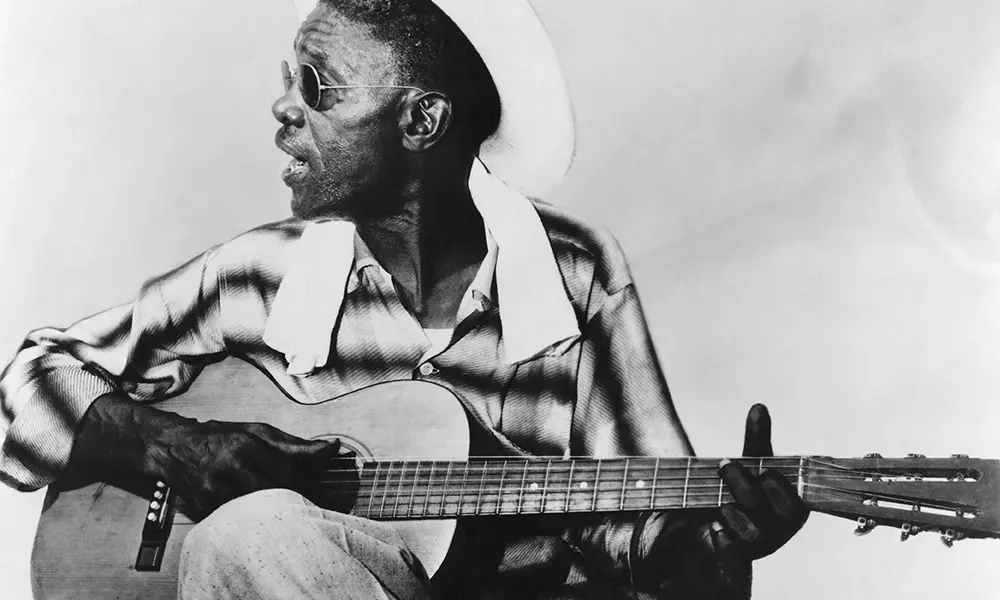
Out of all the major post-war blues giants, Sam John "Lightnin'" Hopkins is easily the toughest nut to crack and dissect, let alone write about. At first, he seems like nothing special: just another country blues feller heavily influenced by the simultaneous rhythm-lead approach of Robert Johnson, the chilling weep of Skip James, and especially the enigmatic mystique of the great Blind Lemon Jefferson, who mentored the young Lightnin' Hopkins when playing together at informal church gatherings. Obviously a worthy playing and performing talent, but with a voice like that, he could even sound a bit meek compared to Charlie Patton or Blind Willie Johnson.

Yet, when you go back to all of the pre-war greats, you really don't find anyone like Hopkins, precisely because all of them were still playing from a personal perspective and concealing the pain of their own lives in musical form. I don't doubt that Sam didn't have quite a lot of himself in the music, but his style first and foremost dissolves himself and assumes a truly epic stance to country blues. It doesn't matter whether he is playing threateningly or tongue-in-cheek: when he does a song for you, he performs like an elder prophet delivering a sermon to a crowd of soon-to-be believers. Playing the humble "country blues" genre with that level of seriousness may be a recipe for disaster, but the combination of slow but absolutely scorching boogie lines with his overflowing levels of charisma and confidence makes the effect of this "jazz-and-poetry blues" truly astonishing. He might have meant some humor in a song like "Short Haired Woman", but with that style, it was simply impossible for the emotional effect not to be crushing.

The only issue that comes with this magnificent style is the monotony: like Nina Simone, every song of his feels so weighty and powerful that it can wear out the listener quickly, and Hopkins had a limited number of grooves he liked to repeat over and over. Yet, in the right dose, just a couple of his numbers can feel more important than some artists' entire discographies. "Shotgun" is a powerful demonstration of that talent. Hopkins's tone is most potent under a textured electric sound, but even under thinner acoustic, he wrings out every note, repeating each one enough times so their ringing impression remains deep with you. When he starts delivering those verses, you can feel that subtle, concealed danger without even glancing at its homicidal lyrics (that aggressive solo around 1:58 is enough to indicate the foul play going on). He has so much terrifying charisma that a mumble is all that's required to scare off the lighthearted, yet the elegant, free-form flow of the guitar and melody makes the vibe sound real and authentic.

Of course, much of Sam's appeal relies on absorbing his personality and presence rather than great compositional talent, which is why he's tougher to get into his discography compared to other blues greats of the 50s. Yet, it's not every day that a singer can come along and sing "if I don't get some competition, there's gonna be trouble in here" and make every breath of that believable, and sometimes, you just gotta live up to a talent like that.

B-side: Rollin' and Rollin'


With Hopkins in his prime, you can rarely go wrong, and this song delivers the goods nearly as well as the A-side. In this song, you can appreciate his signature playing technique in all of its glory, where at times he just lets his guitar loose to twist and turn in those winding series of chromatic turnarounds. Yet, the title isn't just for the guitar technique: the song's desolate, aggressive atmosphere almost embodies the narrative of a lone traveler that can't stay in one place for too long, a mood that is ideally suited for a guy like Lightnin' Hopkins. A mini-atmospheric gem right here, underrated only because of the sheer number of great (but repetitive) songs this prolific (but difficult) artist managed to release.

Verdict: Essential listening


As widely revered as Hopkins is, he is an artist I feel no person who genuinely loves blues music can truly be without, simply because no one could ever recreate the vibe that permeates all of his recordings. On his best singles like this one, it is almost mindboggling how he was able to bottle up the most explosive forms of aggression and misery within a subtle, minimalistic framework and still have the effect be absolutely shattering, and it's this unique personality that still makes this music sounds so timeless today. Perhaps some people might find him too stiff compared to most of his country blues elders, and it is true only 3-4 songs are necessary to understand his essence. Yet, there is a time for fun and variety and there is a time for the terrifying assault of the opening chords of "Shotgun", and it's best to appreciate the best of both of these worlds rather than believing one to be superior to the other.

Tuesday, January 24, 2023

1950 Singles: Moanin' the Blues / Nobody's Lonesome for Me - Hank Williams

Moanin' the Blues / Nobody's Lonesome for Me -  Hank Williams


Why included: 10th in RYM's Top 10 singles of 1950


A-side: Moanin' the Blues


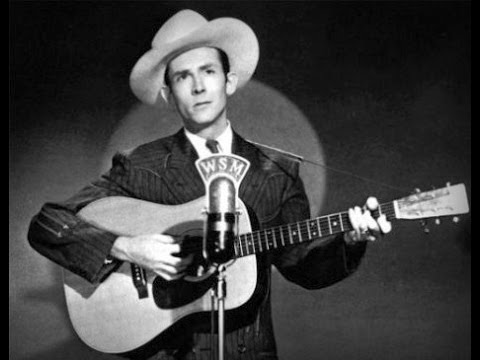
Maybe this title might seem fitter for a grizzly bluesman like Howlin' Wolf than the king of the honky-tonkers, but if anyone country musician had earned the right to put "blues" in one of his titles, it was Hank (well, maybe Jimmie Rodgers as well, but he was an actual country bluesman, closer in spirit to Blind Willie McTell or Mississippi John Hurt than any future country disciple of his). In fact, this is quite a good title because he hardly sings as much as he groans and wails his way throughout the song. This is where he finally nailed the art of edging his audience: rather than having concentrated bursts of pain (like in "Long Gone Lonesome Blues") or destroying his audience with emotion from the get-go (like in "Lovesick Blues"), he slowly but viscerally builds up the tension, constantly sounding like he's on the verge of a breakdown until it erupts with a guttural moan of despair. It has a truly devastating power that few can compete with, providing sizable competition with the gloomiest of Chicago blues and making most other country recordings seem fluffy in comparison. One should never underestimate Hank in a depressive mood, and this is one of the most harrowing examples of his artistic genius.

B-side: Nobody's Lonesome For Me


Apple Music link: https://music.apple.com/us/album/nobodys-lonesome-for-me-single-version/1434905254?i=1434905522

Spotify link: https://open.spotify.com/track/4hx7B8TCMXljgRhQgboyFf?si=d04c7fbec3c941b6

This is as catchy and emotionally striking as anything he released in his prime, but this is one of my all-time favorite songs of his because of how many classic lines are contained here. This is like the ULTIMATE "I'm sad and lonely" song, mixing in self-deprecating humor in the lyrics with genuine anguish to great effect. In fact, the lyrics here are so good I think I'll post the 5 best quotes from the song with some commentary:
  1. "Everybody's lonesome for somebody else, but nobody's lonesome for me" - the chorus itself encapsulates the theme of romantic loneliness so well, doesn't it? Watching everybody happily in relationships and having lovers of their own, but being all alone yourself? I'd even argue that, given that Hank was in a relationship at this time, the song might imply he doesn't have anyone he felt cared about him, his lover not giving him the affection he needed to be happy. 
  2. "When the time rolls around for me to lay down and die, I bet I'll have to go and hire me someone to cry" - man, this is such a morbidly humorous way of saying that "no one will care if I'm gone." It might seem like a funny exaggeration at first, but taking into account his deteriorating mental health and his looming mortality within 3 years of this song, it becomes very eerie to hear him sing that line.
  3. "All I need is a bride who want's a big-hearted groom. I wouldn't care if she come ridin' in on a broom" - I think invoking the "witch" image is actually quite nuanced because a "witch" description is used in different ways, whether it be an evil personality or superficial ugliness. Yet, it could also mean that he wants by some magical spell to have a woman apparate into his life who could appreciate his complex, bleeding personality. Maybe I am reading too much into this, but the fact that I can come up with different interpretations should show he was pretty underrated as a lyricist.
  4. "Oh, I shined up my shoes, and then I slicked down my hair, put on my Sunday suit, but I ain't goin' nowhere" - it's interesting that he would describe all of the work he put into looking nice and then says he's going nowhere. It might seem like that would have a straightforward interpretation, but the reason he is going nowhere is a bit ambiguous. Does he mean he's gonna meet other women and have nothing come out of it? Does he wear his stuff symbolically for his untapped romantic availability? Does the fact it is a Sunday suit mean he is not gonna be able to attain heaven, and if so, what type of heaven is being described here?
  5. "Now I ain't had a kiss since I fell out of my crib. It looks to me like I been cheated out of my rib" - the first line there is just witty and funny, but the second line is actually referencing (as a commentator on Genius.com pointed out) Genesis 2:22, where god made Eve out of Adam's rib to symbolize a woman must be beside her man and how they complement each other. Maybe Hank did spend a little more time writing these lyrics than one would think.
Of course, all of this could be seriously overanalyzing a song that comes across as quite simplistic, and much of their charm obviously comes from Hank's vocal personality. Yet, every line here stuck within my memory walls so strongly that I had to provide some justification for why that was the case.

Verdict: Essential Listening


Really, it's incredible that Hank could churn out dozens of whiny, loser tunes per year and still make each and every one ring true without feeling repetitive or irritating in the slightest. Though, it is hard to imagine his style ever sounding forced if that pathos was all too real, reflecting a tortured, tormented spirit coming from deeply painful experiences in his tragic life Hank was never able to shake off. With this perspective, both the musically devastating "Moanin' The Blues" and the wit of "Nobody's Lonesome For Me" become haunting self-testaments that only become more powerful in an age where this outlook on life only becomes more pervasive. At the very least, Hank will probably be a kindred spirit for so many suffering today, and sometimes, having direct, emotional music like this can be a good friend that can heal in profound ways.

Sunday, January 22, 2023

1950 Singles: Bad, Bad Whiskey / I'm Going to Tell My Mama - Amos Milburn

Bad, Bad Whiskey / I'm Going To Tell My Mama - Amos Milburn


Why included: Personal Pick (#60 on top singles of 1950)


A-side: Bad, Bad Whiskey


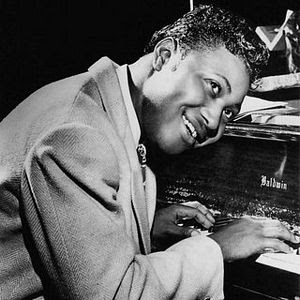
Play any of Amos Milburn's peak-era material, and you'll realize the man playing was no ordinary hackman. Undoubtedly, he was one of the greatest piano players of his generation, delivering masterful solos with a feather touch that simply couldn't be beaten. While his jump-blues peers relied on powerhouse vocals (like Wynonie Harris or Big Joe Turner) or explosively well-oiled backing bands (like Louis Jordan), Amos managed an ideal balance of artsy excursions and kickass entertainment that managed to last the test of time: even if not everybody remembers Amos specifically, you probably know him through covers (Down The Road Apiece and One Scotch have become popular standards) or through his vast influence on future piano-playing entertainers, from Little Richard to Professor Longhair. At least, Fats Domino deeply idolized the man, which means his style is deep-rooted into the DNA of all rock 'n' roll piano players.

Now, with those heaps of praise, some might find this song underwhelming in terms of virtuosic soloing, which may be justified. "Bad Bad Whiskey" topping the R&B charts is generally thought to be the end of his golden age, where Amos started to forgo impressionistic soloing and energetic rockers for slower, classier drinking-related tunes. I concur with this perspective, finding much more musical substance in the elegant "After Midnite" than in the rather simplistic "Let Me Go Home Whiskey." Yet, inspiration doesn't disappear overnight, and this song still retains quite a bit of his inventiveness and charisma. In fact, it manages to impress in the first fifteen seconds with those beautiful explosions of piano notes set to a topsy-turvy rhythm that set the tipsy mood perfectly. Even after the intro is over, the song doesn't lose any of its charm due to the freshness of the vibe, Amos's humble but charismatic voice carrying the song's friendliness throughout. At least, I can see how this sort of booze-tinged good-timey style could have strongly influenced Fats and other New Orleans players, and the fact he could influence the guys who live in this atmosphere is damn impressive.

B-side: I'm Going To Tell My Mama


Quite nice for a B-side since it features some of his fluid, proto-rock 'n' roll soloing toward the end. However, the horn section ends up drowning out most of Milburn's piano playing, and what's the point of listening to Amos Milburn if his performing chops aren't the focus of the song? Still, it's entertaining enough to be passable, so check it out of it you are a big fan of his.

Verdict: Recommended


In his prime, Amos Milburn was a performer who could make practically any song he performed delightful by spicing them up with exciting musical ideas and solos. By valuing substance and intelligent artistry over flashiness, he manages to stake his firm place in the popular music canon. Songs like "After Midnite," "Down The Road Apiece", "Amos Boogie", "Chicken Shack Boogie", "Amos Blues", "My Baby's Boogying", and so many others are not just a must for anyone interested in jump blues but also for anyone who enjoys music that satisfies both your mind and soul. The fact that "Bad Bad Whiskey" (along with his equally famous "One Scotch") happen to be mellow crowd-pleasers shouldn't turn you away from his early greatness, but even with that in mind, they happen to be so enjoyable nevertheless because of that early greatness. So, be sure to give this song a fair chance, and have a couple shots of whiskey while you're at it.

Wednesday, January 18, 2023

1950 Singles: Why Don't You Love Me / A House Without Love - Hank Williams

 Why Don't You Love Me / A House Without Love - Hank Williams


Why included: 7th in RYM's Top 10 singles of 1950


A-side: Why Don't You Love Me


This has got to be one of the (if not the) catchiest, earwormiest songs Hank ever released. Now, like most pre-60s artists, Hank probably borrowed a lot of his core melodies from the rich tradition of blues/folk/country before him, but he always had a knack for choosing just the right vocal phrasings, just the right melodies/riffs, just the right lyrics, and just the right tones/arrangements to make it stick in your brain like no other (indeed, I've heard roughly 40-50 of his songs and I remember how almost all of them go just by looking at the titles). Yet, this song is incredible even for his standards, every moment here manages to be instantly memorable and consistently entertaining the whole way through.

As it goes with Hank, the secret lies deep in the details. Much of the magic here comes from the brutally simple rhyming schemes in the lyrics, allowing the melody and the flow between verses to be buttery smooth. Sure, rhyming "do" with "shoe" and "while" with "mile" might seem inane, but such is the nature of his genius that he can make such a "dumb" song so emotionally striking. The balance of lighthearted friendliness and bleak world-weariness perfectly captures that "depressed self-deprecating humor" vibe he does so well, but he manages to use subtle toning to sneak in unique submoods for each lyric. In fact, you could understand his deeper torment by following the four-part structure of each stanza, starting with a hopeless cry for lost love ("why don't you be just like you used to be?"), questioning whether it is his fault ("how come you find so many faults with me?"), frustratedly retaliating back at his lover ("somebody's changed so let me give you a clue"), and then tries to innocently ask for a genuine answer to his original question ("why don't you love me like you used to do?"). Really, there are so many little details flavoring the whole thing that one could go line-by-line and psychoanalyze the whole damn thing. No wonder this manages to be so memorable: the combination of catchiness and relatability just cannot be beaten.

B-side: A House Without Love


Truth be told, this is not a great highlight of his catalog, but I'll be damned if Hank ever recorded a truly bad song, which is why his B-sides are usually quite treasurable. This one contains his trademark soulful elongations that drown you with his voice, the rich sound of his backing band, and his melancholic vibe that no one could ever fully recapture. Those three elements alone are enough to guarantee its quality will still be miles above 90% of performers in the genre, so why say no to more of a golden formula?

Verdict: Essential Listening


"Why Don't You Love Me" is the perfect example of why one should never quickly dismiss a simpler, more accessible song by a great artist. A fan who appreciates complex gems of his like "I'll Never Get Out Of This World Alive" or "Kaw-Liga" could quickly right this off as a dumb attempt of scoring a catchy hit, which is even how I felt when I first heard it. Yet, artistic genius is not something that ever fully disappears, and even if Hank just tried to write a fun little ditty, it might end up having layers of depth that the artist himself would even struggle to account for. At least, with every listen, my respect for the song grew and grew, which is usually the opposite of what happens with songs like this. So, be sure to give this single the time it deserves, and hey, how could that be a chore with a melody so damn infectious?

Monday, January 16, 2023

1950 Singles: Stack-A-Lee - Archibald

 Stack-A-Lee - Archibald


Why included: Personal pick (#12 on top singles of 1950)


A-side & B-side: Stack-A-Lee


At first, it's pretty weird to think about the fact that "Stack O'Lee," one of the most well-known standards of American popular music, is about an actual murder that took place Christmas 1895, and it's even stranger that musical personalities as different as Ma Rainey, Mississippi John Hurt, and Lloyd Price all covered the song. Yet, after having heard enough versions, it does become clear why the composition is so notorious. First off, the actual name "stack o'lee" is a word with common syllables that make it quite conducive to internal rhyming, so it was easy to vary a musical structure around the title. More importantly though, the song has the unique ability to confront the artist with the idea of death, murder, and the fragility of life in a profound way, forcing the artist deep down to contemplate their own existence in the process. It might be displaying the sick brutality of man (like Nick Cave), expressing their willingness to tough the odds (like Ma Rainey), or treating death as a fact of life to accept (like John Hurt), but no matter sings it, you know that they will not be able to totally toss off far-reaching implications of the subject.

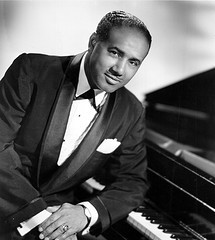
I think it's precisely this weightiness that makes Archibald's rendition such an iconic and influential version (in fact, his is probably my second favorite version ever behind John Hurt's). Like most music from New Orleans, there is playful warmth that permeates the atmosphere, but when facing such a harsh topic, Archibald turns the song into something incredibly life-affirming and powerful. His playing talents and musical phrasings are just so unbelievably rich and nuanced. His smooth-flowing but fluent glissandos and rhythms single-handledly provided the soulful depth required, maybe not as mind-boggling as Professor Longhair's wild-ass piano weaving but every bit as moving. The main piano riff alone captures the whole spectrum of emotions relating to the song: those bouncy little intro piano trickles halted by an affirmative chord that moves into pummeling piano rolls ending with an optimistic finish. Even Archibald's singing provides this level of complexity, preserving both tragic and uplifting overtones in equal proportion that never sounds forced. 

To me, this song is absolutely stunning because Archibald finds such an organic way of presenting the raw human spirit, where we can still thrive and find beauty in adversity by sheer human strength. The song is both heartbreaking and inspiring, yet it never feels like an unnatural juxtaposition to put both of them together. It's this wonderful spirit that became the standard for almost all future versions, but although I respect the greatness of Lloyd Price's and future covers of this song, none of those who modeled Archibald here reached quite as deeply as he did here.

Verdict: Essential Listening


This single alone develops a pretty strong case for why Archibald was such an influential presence in New Orleans music despite being more of a local performer. Throughout the song, he makes each musical phrase not just impactful but meaningful as well, giving you a great entertaining performance that can touch deeply at your soul at the same time. In a way, he provided here the more stately, articulate R&B perfection to Longhair's grimy, gusty R&B perfection, and with the national success of this single, he would help establish New Orleans's musical identity in the modern era and influence many outside those circles as well. The fact that Archibald did not have a long, fruitful recording career is to be lamented, yet the collective spirit of his time and place is so perfectly bottled up here that it provides adequate compensation. Please, give this underrated classic a chance: it may not blow you away at first listen, but it rewards immensely if you give it the time it deserves.

Thursday, January 12, 2023

1950 Singles: Long Gone Lonesome Blues / My Son Calls Another Man Daddy - Hank Williams

 Long Gone Lonesome Blues / My Son Calls Another Man Daddy - Hank Williams


Why included: 1st in RYM's Top 10 singles of 1950


A-side: Long Gone Lonesome Blues


To me, this one stakes its place out of Hank's dozens of classics out of the sheer suspense it manages to generate. One of his greatest assets of Hank is that, unlike so many performers of his time, there are very few artistic layers he builds between you and himself: what you hear is the real deal, and whether it be the deadly seriousness of "Ramblin' Man" and carefree friendliness of "Hey Good Lookin,'" he is able to powerfully communicate his inner spirit through masterful phrasings and arrangements. This song, in contrast, works a bit differently than the directness we're used to from his material. It almost sounds like Hank tried to sing in his typical lonesome style, but the lyrics triggered such painful memories that his inner turmoil would come in brief pangs of groaning pain in between verses. This is where his crying wail from "Lovesick Blues" was truly bottled up as a powerful weapon, using that cracking moan in the song to literally inflict his audience with visceral pain when they least expected it. I guess we should expect a song with such suicidal lyrics like "I'm gonna find me a river, one that's cold as ice / And when I find me that river, Lord I'm gonna pay the price / I'm going down in it three times, but Lord I'm only coming up twice" to be deeply affecting, but only a genius like Hank could have figured out such a striking way of communicating a persisting troubled state.

B-side: My Son Calls Another Man Daddy


Generally seen as a lesser track of his, I happen to view this humble little cover as a minor classic. After all, he probably empathized with the subject matter on a deeply personal level, having dealt with incessant marital and family problems his whole life. His phrasings are just as astonishingly beautiful as usual, elongating and stretching out just the right syllables to make the message of his song clear and heartbreaking. Even then, guitar players Bob McNett (electric) and Don Helms (steel) are equal heroes here, coating the end of each verse with flurries of soft-pinging notes or human-like moans to emphasize the delicate melancholy to this story. It's a shame that a song of such high quality is relegated to mere B-side status, but once you get into the deep richness of the Hank Williams vibe, you'll realize that the man practically did no filler and even a minor B-side can be more emotionally moving than some artists' entire oeuvres. And hey, at least it made it onto his classic 40 Greatest Hits compilation, hopefully allowing people to place it on the same plane as "Settin' The Woods On Fire" and "Howlin' At The Moon."

Verdict: Essential Listening


For a man with a well-defined style and personality, it's amazing how many submoods and ideas he was able to explore within this range. That's why listening to 40-50 songs of his in a row is such a delight: with each song, you get a more and more multi-faceted, humanistic portrait of who he was as a human being. Yes, he had his flaws, shortcomings, and embarrassing moments just like the rest of us, but they only served to make him feel more real and organic. In a way, this confessional artistic paradigm was incredibly modern for his time and thus allows his music to be absolutely timeless, able to be revered by the snobby hipsters of today just as much as country music fans back in 1950. So, even if this is perhaps not his single greatest achievement, it is one of his most quintessential and intriguing successes by the greatest artist of his genre. What bigger recommendation could I really give?

Atlantic/Stax Rhythm & Blues: Anytime, Anyplace, Anywhere – Joe Morris

Anytime, Anyplace, Anywhere – Joe Morris Orchestra Apple Music:   https://music.apple.com/us/album/anytime-anyplace-anywhere-remastered/4398...