Friday, June 2, 2023

Let The Mermaids Flirt With Me - Mississippi John Hurt

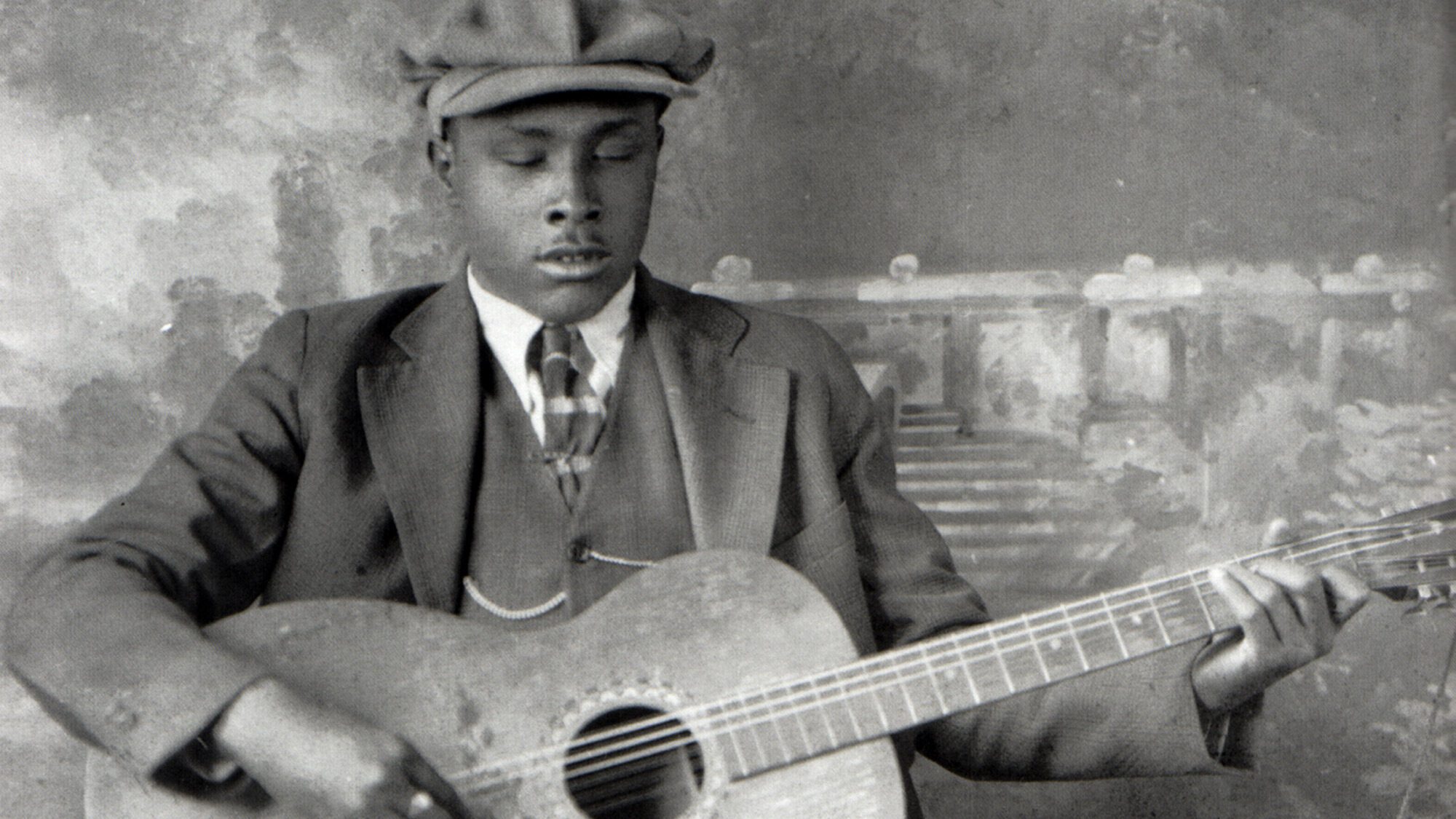
 "Let The Mermaids Flirt With Me" - Mississippi John Hurt


I have yet to find a musician whose music can radiate gentleness and humane warmth so organically like Mississippi John Hurt. Whether he was 35 years old or 73, he always performed as if he is a wise and content old man, having experienced the whole world and found inner peace within it. When you hear him sing and play, you somehow learn the very essence of life itself, but he doesn't teach you by rigid, moralistic lessons. He shows you by subtly healing chords, by stories of redemption from tragedy and cruelty, by tender love between people that seems to transcend all other worldly things. John Hurt's unique personality and approach to music, laying the foundation for nearly all modern folk music, was too modern for the musical world in the '20s, which is why it took all way until the '60s for him to gain the recognition he deserved. Even then, his deeply humanistic message is something that is both understandable to all people but takes a lifetime to process, just because there is so much depth and nuance to each note and breath of his that ever graced a microphone.

This song in particular, a big favorite of mine, was among the last he would record in his life. It was a part of the two final sessions in 1966 he held in a Manhattan hotel, released six years later in an LP titled Last Sessions. What's funny about this song and album in general is that he performs them pretty much in the same way he performed over his whole career. His voice weathered and his technical playing skills weakened, but he was clearly unfazed by his approaching mortality, his style feeling just as natural in old age as it was when he was much younger. 

If you want to understand why, this song is a perfect place to start answering that question. Based on a familiar old folk melody that you can hear in songs like Jimmie Rodgers's "Waiting For A Train", the song both lyrically and musically is based on a deep longing for salvation from worldly troubles, finding no meaning in work, people, and life on Earth in general and dreaming of a paradise underneath the ocean. However, he doesn't sing the song as if he craves such a refuge: he just sings it as if that's simply the flow of life. When he speaks about those pains and sorrows, he speaks about them with melancholy, yes, but with a mindset of acceptance, that life's difficulties are to be endured without fighting or mourning them. At the same time, talking about entering the cool, blue sea and flirting with all of the mermaids brings him joy in a detached way: he does not yearn for any particular fate, happy to get such an afterlife but not afraid to accept whatever he gets. It's such a profoundly beautiful way to live, one that allows you to do what is necessary but find peace and contentment with whatever the unpredictable world brings you. 

This is just one of the many jewels of his career where he succeeds in showing his way of life while soothing the soul, and it's no wonder Mississippi John Hurt struck a chord so deep in future listeners that they went on an expedition in 1963 to find the guy and get him recording again. That's ultimately why, among his many late-period recordings, this holds a place of honor: it's rare that an artist can capture something so deeply universalist, but it's even harder to find someone who can do it with such humility that it seems like a natural part of their being.

Wednesday, May 31, 2023

May 2023 Overview

May 2023 Overview


Writer's Check-in

Hello everyone! Sorry for disappearing for a whole month without a single word. I can't say I was exactly busy, but I didn't have a lot of energy left in the tank for reviewing. As I said last month, the end of April was pretty grueling in terms of workload, and by the end, I didn't feel pushing through the whole month on a regular reviewing schedule was realistically possible. I did end up still writing quite a bit, but it falls into a) reviews I don't think anyone really wants to read and b) rambling to friends over messages. So, instead of reviewing, I decided it was worthwhile to just take some time to just take in and thoroughly enjoy music without analyzing it formally. It was a lot of fun to do that (especially since my music listening sharply decreased during last semester), and I got to check out a lot of new music and revisit old favorites I hadn't heard in quite a while.

However, I don't think I am capable of just listening to music without writing my thoughts forever, so I'll try to get this going again. The plan is to start out doing a song of the day review once again, but I might throw in a mini-essay or an album review if in the mood. I think having a set schedule doesn't seem to really work for me, and I have more motivation to continue the blog if I am writing about stuff I am currently listening to. So, don't expect a cohesive direction to it, but if this works, you can expect much more regular writing on here in the future. I'm looking forward to the future of the blog, and I hope you guys are too!

Music Stats for the Month

Total Listening Time: 193 hours. I wasn't kidding about listening to a lot of stuff this month!

Top Artist: Charley Patton. The vocals are obviously unbeatable (even by people like Howlin' Wolf, who took it in a more extreme, brutal direction but also lost some of the underlying humaneness of Patton's style), but even more than that, there are few artists who had such a powerful understanding of rhythm to make those recordings come alive. At his best, he could make you want to dance with all of those clever rhythmic structures and memorable, hooky phrasings, but when catching him in a somber mood, he could easily churn your guts with those raw, vigorous grooves to make you physically feel whatever he was singing about. Definitely not the easiest artist to get into (partially since the recording quality isn't that great), but once you do, it's totally worth the while.

Top Album: The Best Of Charlie Patton - Charley Patton. Like most artists in their 20s and 30s, the sound quality sounds like shit, but Yazoo always does an excellent job cleaning them up. I highly recommend using this comp to get into him, it has practically all the essentials. Though, I do wish that "Prayer of Death" made it here.

Top Song: "Down The Dirt Road Blues" - Charley Patton. One of his toughest, hardest-rocking songs ever, it's one of those songs that has a perfectly sharp, straight-edged direction to it, kicking and plowing through a rough dirt road into the horizon. The rough directness of the vocals absolutely tears here, but it is also rich with tasty guitar rhythms and tones as well. Just hear those awesome stinging tones around the one-minute mark and how perfectly he blends them into the chopping rhythmic sound. Just one of the many masterpieces he crafted at the very beginning of his career.

Video of the Month

"Earth Angel/Johnny B. Goode" - Tim May/Michael J. Fox/Mark Campbell

I watched Back To The Future for the first time when I was in elementary school and didn't really like it too much. I'm not sure what exactly didn't appeal to me about it back then (since it's a pretty entertaining movie), but I crossed paths with the movie once again when I started working through the famous Doo-Wop Box and stumbled upon the Penguins' "Earth Angel", a magnificent doo-wop single that quickly became one of my favorites of the genre (who can resist such a beautiful chorus?). The song was also featured in the movie, so I went ahead and watched the whole clip again. Now, the "Earth Angel" part is solid and important in the movie, but the real reason I picked this particular clip was the awesome "Johnny B. Goode" rendition. Of course, anybody who covers Chuck Berry will be on my good side, but I was absolutely blown away by how perfectly they were all able to nail the essence of rock 'n' roll in that one scene. 

Everybody notes the wide range of styles and rock references they cover, from the classic Berry duckwalk to the windmills and amp kicking of Pete Townshend to the melodic speedy metal tapping and soloing of Eddie Van Halen, yet the truly awesome part is how the flow of rock history in the performance feels so organic within Chuck's self-aggrandizing anthem. It makes you feel that all of these different offshoots of rock 'n' roll, as much as they kick ass in their own special ways, all have a deep spiritual bond that unifies them: the feeling of freedom, optimism, and excitement in the original and the best of 50s rock 'n' roll creeps into all of these future styles so well that they all feel at home here. It's a rare and beautiful moment where you can see the universalist vision of rock music unfold before your very eyes, and even if this movie itself isn't a huge favorite of mine, this one moment was absolutely priceless. Check this great scene out if you haven't already.

Articles & Reviews

As I said above, I spent most of this month listening rather than writing about music, so no new reviews for now, but I'll get this kicking back up again very soon!

Monthly Playlist


Yes, you guys know the drill, the playlist is nearly 66% made up of blues and soul tracks (they're GREAT blues and soul tracks though, so check them out!). Though, there has been a little more variety of music this month: little bits of Britpop, post-punk, Krautrock, hard-rock, and alt-rock should make the playlist a little easier to digest for people whose lives don't revolve around bluesy grooves. So, dig in to get a nutritious dose of great music :)

Here is the tracklist:
  1. "Funky Broadway" - Wilson Pickett
  2. "When A Man Loves A Woman" - Percy Sledge
  3. "I Want To Do (Everything For You)" - Joe Tex
  4. "I Wouldn't Treat A Dog" - Bobby "Blue" Bland
  5. "Cry, Cry, Cry" - Bobby "Blue" Bland
  6. "Baby, I Love You" - Aretha Franklin
  7. "Hot Time In The Old Town Tonight" - Mississippi John Hurt
  8. "Made To Love" - The Everly Brothers
  9. "Won't You Give Him (One More Chance)" - Solomon Burke
  10. "I'm In Love" - Wilson Pickett
  11. "A Sweet Woman Like You" - Joe Tex
  12. "Cloud Nine" - The Temptations
  13. "Oh Me Oh My" - Aretha Franklin
  14. "Disco 2000" - Pulp
  15. "Hobo Blues" (1949) - John Lee Hooker
  16. "I'll Be Around" - The Spinners
  17. "Red Hill Mining Town" - U2
  18. "Standing In The Shadows of Love" - Four Tops
  19. "Mississippi Bo Weavil Blues" - Charley Patton
  20. "One Tree Hill" - U2
  21. "New Year's Day" - U2
  22. "Teeth Like God's Shoeshine" - Modest Mouse
  23. "A Spoonful Blues" - Charley Patton
  24. "One More Night" - Can
  25. "Sunday Bloody Sunday" - U2
  26. "Chartered Trips" - Husker Du
  27. "Jealous Hearted Blues" - Ma Rainey
  28. "Without The One You Love" - Four Tops
  29. "Baba O'Riley" - The Who
  30. "Patches" - Clarence Carter
  31. "Cowboy Dan" - Modest Mouse
Well, that's all I have for now. I sincerely hope I can keep this blog going because writing about music that I love means a great deal to me, but hopefully loosening things up will help out in that regard. Hope you see you all soon!

Sunday, April 30, 2023

April 2023 Overview

April 2023 Overview

Writer's Check-in

Hello everyone! I hope you all are doing well. I know I am especially happy to be done with the semester. Not that I didn't have a lot of fun these last 4 months (this has probably been my favorite semester of college thus far!), but I am pretty damn tired and needed a break from the regular college schedule. This break will be pretty relaxed overall for me, so hopefully I can get some rest and some music writing done. The only problem is I have almost exclusively been listening to Motown and Atlantic R&B singles. I guess it's because soul/R&B is strongly associated with the spring and summer for me since those are the most uplifting seasons of the year, and what better music is there for stirring the soul and getting you moving? I certainly can't think of much else.

So, I plan to do at least two major things before August is through: first, I would ideally like to get at least 2 long-form pieces done to be published in Fall, just to have some material ready so I don't enter dire straits in the semester in terms of generating content. Second, I would like to begin a very big project: make definitive retrospectives of Atlantic, Motown, and Stax/Volt. All three have put together boxsets compilations of their best material, but I would like to go through and actually review it all along with making my own amendments to what I would add to each. This will obviously be a huge project, but I think it could seriously help get people into a lot of classic soul, a tradition of music I believe must always be remembered for the health of all consumers of Western popular music.

Anyways, that's all for now. I hope you guys are having a nice summer, and I hope to see you guys on a semi-regular basis from now on!

Music Stats for the Month

Total Listening Time: 107 hours, more than last month but still way less than normal. Probably gonna change over the next four months though!


Top Artist: Blind Willie McTell. We (rightfully) crown Blind Blake as "King of the Ragtime Guitar," but it's about time we crown good ole Samuel "King of Piedmont Blues."


Top Album:
 The Best of Blind Willie McTell. The sound quality of this compilation is excellent, but I wouldn't recommend this being your only acquaintance with McTell since it only really covers the early years (1927-1931) and leaves out many classic recordings ("Delia", "Georgia Rag", "Razor Ball", "Savannah Mama", the entirety of his Atlantic recordings, too many to mention).


Top Song: "You Got To Walk That Lonesome Valley" - Mississippi John Hurt. Luckily the audio from this recorded performance is available on Apple Music (not on Spotify though, I'm afraid), but you can always watch this wonderful performance here. There is a meditative, spiritual quality to some of his pre-war artists that makes you feel that god really flows through their bodies when they play.

Video of the Month

Son House - Death Letter Blues/John The Revelator (1969)

There are no words that can adequately describe the emotional effect of watching this master of Delta blues play and perform. Son House is absolutely crushing in audio effect alone, the combination of the fire-and-brimstone-preaching vocal approach with his brutal, stinging picking style is utterly devastating. Yet, to watch him wring the maximum expressivity out of his guitar and make those facial expressions as he sings these songs is one of the most intense video-watching experiences you'll have. The stories he tells before are gripping and add quite a bit of substance to what is about to be played, and both songs, among the greatest songs in his repertoire, are incredible here. It is vital to listen to Son House to understand the essence of this school of blues playing, and this recording will force you to feel that spirit on a whole new level. I know when I first watched it, I was mesmerized the whole way through.

Reviews

No new reviews this month, but some soul/R&B reviews will be coming! Stay tuned!

Articles

This is the real big news: I managed to finally get out two pieces this month! A third one is done (just a republish of my old article on Sam Cooke's Soul Stirrers period), but it is still in the works of getting edited. I am quite proud of both of these, so I hope you enjoy them!

Monthly Playlist


Honestly, this might have been one of my favorite monthly playlists I've made. Maybe it's because I find the songs in it uplifting and soulful, maybe it's because of the high proportion of upbeat soul anthems, or maybe it's because it's got a little bit of everything I like in soul/blues music in general. I don't really know, but I had a blast putting this together over the month, so I hope you all enjoy it!

The only substitution I got to address is that the original playlist had "You Got To Walk That Lonesome Valley" by Mississippi John Hurt, but the recording is not available on Spotify. Instead, I replaced it with another song of his, "I'm Satisfied", a beautiful and underrated little tune that definitely deserves more love. There can never be enough Mississippi John Hurt in your life, so be sure to check out "You Got To Walk That Lonesome Valley" whether or not you have Apple Music!

Here is the tracklist:
  1. "Dancing In The Street" - Martha Reeves & The Vandellas
  2. "Juke" - Little Walter
  3. "It Takes Time" (1969) - Otis Rush, which you can read my detailed thoughts about him here.
  4. "Mother's Last Word To Her Son" - Washington Phillips
  5. "Space Guitar" - Young John Watson
  6. "Hey Little Girl" - Professor Longhair
  7. "Proud Mary" - Creedence Clearwater Revival
  8. "Kill It Kid" - Blind Willie McTell
  9. "Samson and Delilah" - Reverend Gary Davis
  10. "You Got To Walk That Lonesome Valley" or "I'm Satisfied" - Mississippi John Hurt
  11. "Shouldn't I Know" - The Cardinals
  12. "Hey Hey" - Big Bill Broonzy
  13. "Ain't No Love In The Heart of the City" - Bobby Bland
  14. "Milk Cow Blues" - Sleepy John Estes
  15. "Nowhere To Run" - Martha Reeves & The Vandellas
  16. "Quicksand" - Martha Reeves & The Vandellas
  17. "Flip Flop and Fly" - Big Joe Turner
  18. "Gimme a Pigfoot" - Bessie Smith
  19. "Get Ready" - The Temptations
  20. "Two Lovers" - Mary Wells
  21. "Young Blood" - The Coasters
  22. "I Fought The Law" - The Clash
  23. "Ruby Baby" - The Drifters
  24. "You Really Got A Hold On Me" - Smokey Robinson & The Miracles
  25. "What Am I Living For?" - Chuck Willis
  26. "Last Night" - The Mar-Keys
  27. "See Saw" - Don Covay
  28. "I Feel So Good" - Big Bill Broonzy
  29. "Just One Look" - Doris Troy
  30. "Land Of 1000 Dances" - Wilson Pickett
OK, that's all for now. Thank you to everyone for reading my lengthy love letters to the music I love. Here's to a nice May and beyond!

Aural History: The Slow-Burning, Soul-Splitting Heartache of Otis Rush

 Aural History: The Slow-Burning, Soul-Splitting Heartache of Otis Rush

How Otis Rush taught his electric blues peers how to weep in song and truly confess the blues.

Photo courtesy of DownBeat

The blues genre is one of the most direct genres of emotional expression in Western popular music while paradoxically also being one of its most mysterious and enigmatic. From the initial explosion of ’20s classic female urban blues to the amplified heights of ’50s Chicago blues, the greatest blues musicians aimed to simply translate the reality of their lives into musical form down to the subtlest of tones and hushiest of breaths. Despite its gloomy reputation, the blues is wide enough in scope that it could truly encapsulate every facet of the human experience, whether it be softly caressing a loved one late at night, taking a stroll down a busy street, or suffering alone on one’s deathbed. The great blues songwriter Willie Dixon used to call the genre “the facts of life,” and there are few descriptions that are more apt for a genre so concerned with the here and now.

However, this expressivity of the genre was not always direct — the trauma and suffering that many blues artists faced was so unbelievably intense that directly communicating their feelings would be too revealing, especially for those who relied on a tough, gritty image to survive day to day. That is why so many artists of the genre relied on implying their true feelings through allegories and symbolism in their lyrics, shielding their souls from harm and concealing a much darker reality they did not have the strength to fully expose. But Otis Rush broke clearly from this tradition, daring to bare himself to his listeners more than anyone before him. Like many Chicago bluesmen, he had a tough, lonely childhood, growing up in rural Mississippi in a poor sharecropping family. Yet, unlike Muddy Waters, Howlin’ Wolf, Sonny Boy Williamson II, and his other Chicago peers, who often internalized their suffering to create a tough-edged sound, Rush searched far deeper within himself, facing his trauma and insecurities head-on. In his view, bluesmen should not merely hint at emotional pain, they should make the genre bleed, weep, mourn, and scream out in agony, and if any blues conventions would prevent him from achieving the maximum confessional effect, he would simply rewrite them.

This approach was a radically new paradigm of playing the blues, so to pioneer the innovative style, Rush soaked up the rich, bluesy atmosphere of Chicago, playing various clubs on the West and South sides throughout the early 1950s. It is here he met the songwriter Willie Dixon, the primary architect of the city’s blues sound at the Chess label. He was so impressed by Rush that he got him a record deal at the newly created Cobra Records, where the latter would make a name for himself. Founded by Eli Toscano, it was a small, upcoming label that could not even afford its own studio, but with visionaries like Otis Rush onboard, it would be the foreground for the creation of the West Chicago blues sound. From 1956 to ’59, Rush recorded eight singles for the label that would become landmarks of the genre, freeing it from its solemn reserve and allowing it to be a vehicle for expressing his deepest fears, regrets, and sorrows.

In the sessions for Rush’s first single, Willie Dixon hummed him a melody for a song he wrote about the singer’s relationship at the time, and Rush would transform the song into a standard of the genre: “I Can’t Quit You Baby.” A masterpiece about feeling imprisoned by love, the original version was a showcase for his impassioned vocal style, where you can clearly hear the pent-up tension and frustration each time he roared out the main chorus and brought his voice to a strained falsetto. However, Rush’s true tormented soul can only be fully communicated through his guitar playing, and the best version of the song to hear is the famous unreleased alternate version he recorded soon after. It simply obliterates its listeners with emotion within 15 seconds, the combination of the horn section and the singer’s slow-burning, drawn-out guitar phrasings making for one of the most weeping, devastating musical statements of the decade. Rush was one of the first electric guitarists who tried to teach his instrument to truly cry with all of the long-bent notes and lengthy phrasings to give the impression of a desperate, suffering loner trying to find a way out of an unfeeling world, and this recording was the first time he unlocked its full potential.

With the next single’s B-side, “My Love Will Never Die,” he would up the ante of emotional turmoil even further. Dixon’s original with the Big Three Trio was a pensive, quiet ballad of heartbreak, the tragic heights contained within the lyrics was not fully unleashed until Rush recorded it. If the horn-guitar intro to the alternate version of “I Can’t Quit You Baby” expressed the anguish of romantic frustration, the horn-guitar intro to “My Love Will Never Die” is the sonic equivalent of Rush engulfing himself in musical flames as the creaky horn section screams out in terror. He gives it a solemn, funeral-like march, stretching out each verse to make it sound as if he was physically trembling. Those subtle guitar flourishes add the necessary sonic depth, but it's really all about Rush purging his demons right in front of you. This recording is the most romantically desolate the blues have ever sounded as if his body were to lay to waste after delivering this last fiery swan song.

Among Cobra’s first singles, “I Can’t Quit You Baby” was a commercial success, hitting number six on the Billboard R&B chart, and “My Love Will Never Die” was a major artistic triumph for Rush. Both tracks allowed him to kick his recording career into full throttle, helping him explore as many creative directions as he could and elevating the reputation of his label sky-high. Even within the heartbreak subgenre of blues he created, Rush designed a wide assortment of dramatic, emotionally striking riffs, be it the sizzling unease of “If You Were Mine,” the sharp-as-a-knife riff of “It Takes Time,” or the weary pings of “Groaning The Blues.” He even converted the epic machismo of “Hoochie Coochie Man” riff into a gut-retching cry of heartache on “Love That Woman,” pulling out the pain deeply encoded within the song. Yet, Otis was just as talented in conveying things other than depression —both “Sit Down” and “She’s a Good ’Un” are delightfully grimy and sexual, and he managed to make Willie Dixon’s classic “Violent Love” a magnificently refined and exquisite love serenade.

This exciting artistic run would unfortunately not last much longer. Through poor management and a looming recession, the record label was beginning to go bankrupt. It is during this period that Rush released his most career-defining songs: “Double Trouble,” “Keep On Loving Me Baby,” and “All Your Love,” all of which became some of the most revered recordings in the genre and would be covered dozens of times. Most of all, this “desperation trilogy” captures his greatness as an artist better than anywhere else, breaking the usual conventions and making music that was entirely his own.

Photo courtesy of The Sunday Times

The most famous of the three is “All Your Love,” primarily due to Eric Clapton’s version with the Bluesbreakers and its later influence on Peter Green and Santana’s “Black Magic Woman.” Nonetheless, Rush’s version is unquestionably an epic recording in blues history, iconoclastically shattering down expectations with its deeply cutting, angular riff and Afro-Cuban groove that gave it a unique flavor among all the seminal recordings in the ’50s. Rush didn’t incorporate these unusual elements to merely test the boundaries of the genre — the distinctive rhythm really does make the song feel frantic within a controlled order, expressing an infatuation that causes just as much psychological chaos as it does between lovers.

Lesser known but not any worse, “Keep On Loving Me Baby” is simply a blues explosion, each stuttering riff sounding as if Rush were lighting a fuse that would cause the horn section to erupt with a mighty shriek. It is also here where you find one of the singer’s most crushing vocal performances, where he slowly increases the anguish in his voice until he is practically growling his way through the song.

Still, both of these recordings still pale in comparison to the epochal greatness of “Double Trouble,” arguably not just Otis Rush’s greatest song but also one of the greatest recordings in the genre ever. The subject matter itself is not unique in the blues — the topic had dozens of purveyors well before Rush began performing. Yet, this song is a masterpiece because it does not hold back one bit from expressing the intensity of feeling it can induce. The iconic line “They say you can make it if you try / Yes, some of this generation is millionaires / It’s hard for me decent clothes to wear” is an unbelievably striking lyric that embodies what it is like to be beaten down over and over again, giving everything to try to survive but failing anyways while seeing everyone around you succeed. It is this poignancy that makes it deeply felt by those who have never faced poverty in their lifetimes. Everything, from the hazy horn swoops to the bleeding, aching guitar tones provide the smokey, isolated atmosphere necessary to show deep, inner turmoil, but the whole song truly climaxes in the main riff, the most heartbreaking musical phrase in his catalog. It captures the mental breaking point when that final pang of despair finally causes the listener to lose their composure and truly sink within themself. The true magic of the song lies in the fact that it achieves these tragic heights through honest emotional expression. There are no theatrical or symbolic elements at play here, no lines drawn between the listener and Otis. He expressed the full depths of his soul here.

With these final recordings, Rush had reached an artistic summit few blues artists would ever attain, but it was sadly not a peak that would last after Cobra went bankrupt. Otis Rush was not much of a self-promoter and was more interested in playing the music he loved than fulfilling his showbiz obligations, which led to the mismanagement of his artistic genius as he moved from label to label. He still continued releasing some excellent singles (“You Know My Love,” “Homework,” etc.) and albums (such as Mourning in the Morning), but none of it was nearly as awe-inspiring as his ’50s peak. Still, he continued to perform in the studio and live off and on until his passing in 2018.

Nevertheless, Otis Rush demonstrated that all genres need a person who can come in and remind everybody why they all make music in the first place. At times, some artists can get so used to operating under a veil that they become afraid of lifting it for their audience, and that can often get in the way of building meaningful connections between an artist and the world around them. Rush showed his peers that the greatest asset that all bluesmen have is themselves and the reality they live in, and the more authentically they express their world and the feelings that come with living in that world, the closer they will get to creating music that can heal themselves and others around them.

Thursday, April 6, 2023

The Glory, Gloom, and Greatness of the Blues: A Brief Chronology (1920-1971)

 The Glory, Gloom, and Greatness of the Blues: A Brief Chronology (1920-1971)

Dive deep into the rich history of the blues by exploring some of the most powerful classics of the genre.

Photo courtesy of American Memory from the Library of Congress, NewSounds.org, Clemson University, NPR

The blues are a testament to the fact that making great music isn’t about faultless craftsmanship, writing complex compositions, or impeccable playing — it is about transposing yourself into the music, allowing it to embody the inner workings of the soul. And when it comes to this form of expression, no genre does this better than the blues, where its best representatives brewed deep-rooted tones and dug up their buried emotions to produce some of the most direct, intense music ever made. No wonder that a blues song (“Crazy Blues”) kickstarted the growth of the music recording industry, and blues melodies are still widely utilized today.  Whether it be singer-songwriter folk, hip-hop, electronic music, or alternative rock, the roots will always be colored blue.

To celebrate the wonderful, timeless music they created, here is a playlist that serves as a retrospective of the history of the blues, featuring 52 great and/or important names who debuted onto the scene between 1920 and 1959. Even with the limited possibilities of chord progressions and melodies, the genre is quite diverse; from dense, jazzy ensembles of classic female blues to the brutal, acoustic intensity of delta blues to wild, indulgent fun of jump blues. To supplement the listening, we’ve put together a listening guide, listing all 50 songs with the approximate year they were released along with notable covers of each song. Many of the blues standards in this playlist compose the musical DNA of so many great, influential artists that you can feel the deep connection between these blues greats and their disciples.

Hopefully this playlist will inspire some to go check out many of these seminal names. It may be difficult to get past the repetitive and raw nature of the blues, but the rewards are indescribably immense. Many of these artists lived extremely difficult and tragic lives, but the inner strength they displayed in  not just surviving but creating music that still can heal and mend our souls today makes this genre the lifeblood of almost all popular Western music. It is worth every single ounce of effort to learn to empathize with these past greats, and I hope this playlist can serve as a helpful guide on such a spiritually uplifting journey.


Friday, March 31, 2023

March 2023 Overview

 March 2023 Overview


Writer's Check-in

Hello all! Hope you all are doing well and had a nice March. I certainly did, even though not much has happened this much besides working, listening to music, and hanging out. Not that I really need to do more than those three things to be satisfied — hey, I'm pretty happy with how life has been going, and I don't ask for much more for my basic needs to be fulfilled. I think more and more I realize that people are what give life meaning to me, whether it be my family, friends, or the musicians I listen to. We are not singular entities as human beings: we are defined by who we are with because a close connection brings out something that I would not have on my own. Life is worth living first and foremost for the people in my life who give me meaning, and I am constantly grateful for all of them, whether I can meet them in-person regularly, talk to them online, or hear their souls preserved in musical recordings.

Music Stats for the Month

Total Listening Time: 105 hours, which is probably one of the lowest it's ever been. It's mostly because I've been much less busy work-wise this month and have been spending more time hanging out with friends, which isn't always conducive to listening to music. Still, any music listening at all is good for the mind, body, and soul, so who cares how much?


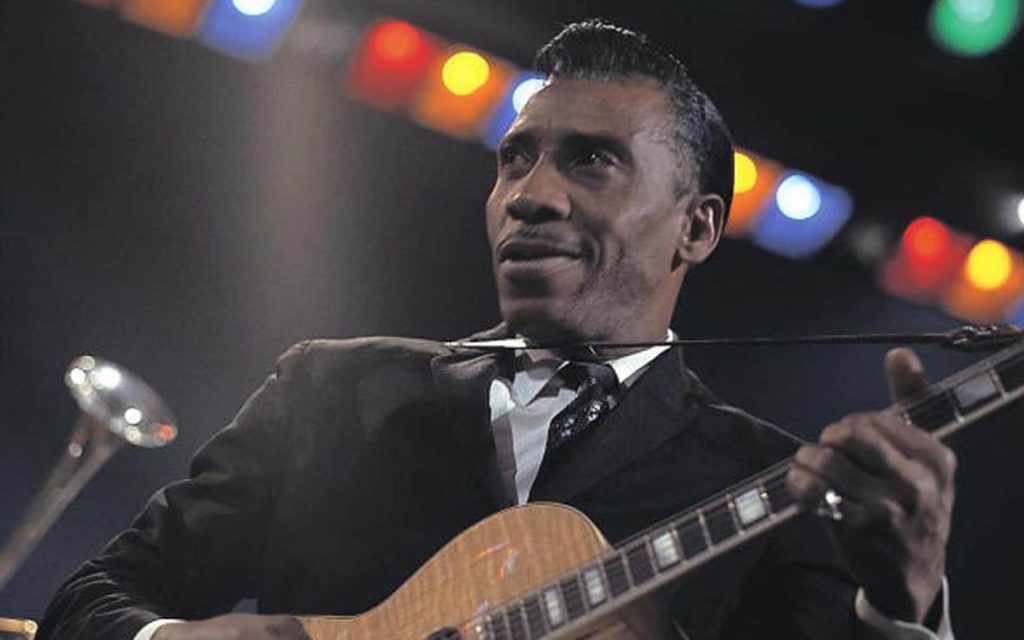
Top Artist: T-Bone Walker. Yep, he made it to the top second month in a row. What can I say? I cannot resist that damn guitar tone!


Top Album: The Complete Capitol/Black & White Recordings - T-Bone Walker. Well, I guess this is also expected based on my top artist, but the collection seriously is a stunning achievement in electric blues history. The first disc of this is friggin' incredible, and the other discs are excellent too (if not nearly as immaculate).


Top Song: "Ain't No Tellin'" - Mississippi John Hurt. "Louis Collins" is still my favorite song from the sessions, but this is a very close second, and it is even harder to pinpoint the source of its powerful spiritual impact. Guess his music was so immediate and humanistic that it takes a lifetime to fully understand how it manages to do so.

Video of the Month

Taj Mahal - Queen Bee (2014)

I remember a story where Buddy Guy, upon checking into a hotel before a show, met a couple who noticed he was a blues musician and said to him "you play blues. That music is so sad." He gave them tickets to his show, and they came up afterward and said "you didn't play one sad song." 

The thing is that the blues as a genre isn't sad: blues is about direct confrontation and acceptance of the facts of life that we often overlook and try to ignore but nevertheless cannot avoid, and unfortunately for most of us, the material world, with all of its forms of decadence and brutality, makes it difficult for many bluesmen to see anything but darkness. Yet, the blues can just as much be about things that keep us going despite the odds, and this song and performance capture that spirit so well that love, especially for those closest to us, can not just make life beautiful but become the beauty in life that we search for. There are few musical documents that feel more natural and organic than this, three guys just rolling along the spiritually uplifting streets of New Orleans and channeling that energy within this humbly romantic song, a minor gem in his catalog that reached its full potential here. What I would give to be there when it happened, would be enough to nourish one's soul for life.

Reviews

So, unfortunately, I will temporarily be putting the history of the singles review series on hold, for now, to focus more on articles and requested reviews. I did put out a couple in the old format, so here they are with the recommended songs bolded:
  1. Mona Lisa / The Greatest Inventor (Of Them All) - Nat King Cole
  2. The Tennessee Waltz / Boogie Woogie Santa Claus - Patti Page, but I highly recommend hearing both Sam Cooke's and Otis Redding's covers of the song!
  3. Goofus / The Thing - Phil Harris

Articles

I know, it was a long wait, but the Neil Young article is finally complete (hope it was worth the wait). It will be published in print in April, but since all the edits were done, I decided to post it here with some notes and pictures. There is another article I am waiting to get fully finished editing-wise, so stay tuned for that!

Monthly Playlist


If anyone got tired of my playlists being too old...well, maybe they'll still have a problem with this playlist I guess, but it is definitely more accessible than the last two or three have been. I have been recently Motown-pilled (even if I instinctively find the best Atlantic and Stax/Volt singles more to my taste), which is why 20% of the playlist comprises some huge Motown singles. Besides that, the playlist is pretty focused on pre-60s blues and R&B, but I would say the songs are generally more accessible this time around, so feel free to dig in and let me know what you think!

Here is the tracklist:
  1. "Lift Him Up That's All" - Washington Phillips
  2. "Jinx Blues No. 1" - Son House
  3. "Let Me Play With Your Poodle" - Lightnin' Hopkins
  4. "Long Tall Sally (Live at Star Club)" - Jerry Lee Lewis
  5. "One Scotch, One Bourbon, One Beer" - Amos Milburn
  6. "Tennessee Waltz" - Otis Redding
  7. "Rock Your Baby" - Wanda Jackson
  8. "Sugar Dumpling" - Sam Cooke
  9. "Ain't No Tellin'" - Mississippi John Hurt
  10. "(Your Love Keeps Lifting Me) Higher & Higher" - Jackie Wilson
  11. "Don't Leave Me Baby" - T-Bone Walker
  12. "Come On Around To My House Mama" - Blind Willie McTell
  13. "Going Down" - Freddie King
  14. "Rocket 88" - Jackie Brenston & His Delta Cats
  15. "Bring It On Home To Me" - Sam Cooke
  16. "Delia" - Blind Willie McTell
  17. "Queen Bee" - Taj Mahal
  18. "Long Skirt Baby Blues" - T-Bone Walker
  19. "Strollin' With Bones" - T-Bone Walker
  20. "Think" - James Brown
  21. "Do You Love Me" - The Contours
  22. "Roll 'em Pete" - Big Joe Turner and Pete Johnson
  23. "Jamie" - Eddie Holland
  24. "Someone To Love Me" - Solomon Burke
  25. "Rag, Mama, Rag" - Blind Boy Fuller
  26. "The Tears of a Clown" - Smokey Robinson & The Miracles
  27. "The Love You Save" - Jackson 5
  28. "Don't You Know I Love You" - The Clovers
  29. "Bob McKinney" - Henry Thomas
  30. "Ooo Baby Baby" - Smokey Robinson & The Miracles
  31. "The Tracks of My Tears" -  Smokey Robinson & The Miracles
OK, that's all for now. Thank you all so much for reading all of my lengthy rambles, and cheers to everyone for a great next month!

Rebirth from Chaos: Neil Young's Journey Through The Ditch

Rebirth from Chaos: Neil Young's Journey Through The Ditch


As a note to this soon-to-be-officially-published article, I do want to say this is perhaps the most difficult thing I've ever had to write. It was not because of the length (anyone who knows me knows I always have a lot to say), but it's more than this music coincided and got me through one of the worst and scariest periods of my life. Since his music is unavoidably associated with that time, much of my writing here reflects the state of mind I was in back then, which was not that far off from what Neil describes his own state of mind to be in his "Ditch trilogy". I guess what I am trying to say is that I am just so deeply thankful to Neil Young for having the maturity and mental strength to be able to make art as meaningful as he did and for helping not just me but thousands more sort through their own emotions, come to terms with what happens in life, and finding a way out of a depressive state. Life seemed less scary with Neil to console me, and I hope this article it clearly shows not just what his music means to me but also why I feel everybody should give his music some serious listens. Now without further ado, here is the article:

A chaotic period can be one of the only times when the self is fully understood. Caught in the steady flow of life with all of the responsibilities, events, and material pleasures it entails, it can be easier to simply ride the waves and totally ignore who we are in the process. It’s when a storm begins to brew that comforting equilibrium gets irreversibly shattered, where we are forced to confront ourselves head-on. In a personal crisis, we are mentally trapped within the eye of a hurricane: destruction and disarray surround us, but within the far less destructive confines of our mental space, every part of our being becomes uncomfortably magnified with an almost terrifying level of clarity. Some might find such periods depressing and painful, but at the same time, they can be a transformative period of growth, reassessment, and self-discovery. When all the wounds and scars have been mended, one comes out not only stronger but more self-assured than ever before.

If there is a testament to the subtle healing power of these periods, it is the enduring power of Neil Young’s output during his tumultuous “classic era.” From the jingly-jangly warmth of “Burned” back in 1966 to the apocalyptic strikes of blood-soaked distortion in the Rust albums of 1979, he encountered more setbacks, hit more dead-ends, and suffered through more pangs of disillusionment than most people do in their entire lives. At the same time, it was just as much a period of searching, trying to find himself and his life purpose in the troubled decades of the ‘60s and ‘70s.  As a result, Young’s “classic period” became a rich, kaleidoscopic portrait of himself, with each album feeling like another shard in the greater picture of his life. It would take great hardship and looking deep within himself through three introspective albums called the ditch trilogy (1973-1974) to complete it, but this era was also a period of great healing toward a future he wanted to live in.

Neil’s turmoil can be felt from the earliest of his compositions, as he started his career in his hometown of Winnipeg, playing in instrumental rock bands and folk clubs. However, even then, Neil felt the looming, irreversible fate of reaching adulthood, feeling lost on what he would make out of his life. The quiet, insecure contemplation of “Sugar Mountain” documents the loss of innocence, the soft strum and murmur of his vocal performance subtly revealing anxiety about leaving the comforts of childhood for an intimidating world. 

He would soon face those big, coming-of-age changes he feared. New to Los Angeles, the singer had to stake his own presence in the newly formed folk-rock band Buffalo Springfield, composed of himself, Stephen Stills, and Richie Furay, who were all vying for creative control. On their debut album, Young was already searching far deeper within himself for inspiration than his bandmates, with songs like “Burned” and “Out of My Mind” reflecting upon his wounded psychological state both instrumentally and in abstract lyricism. However, his bandmates deemed his high-pitched wails too inaccessible and had Furay sing sang the lead vocals on most of Young’s compositions, stripping them of their introspective depth. Still, his style came into bloom, and one could feel that his confidence strengthened against the backdrop of his intra-band rivalry with the talents of Stephen Stills. 

All of this would change with 1967’s “Summer of Love” and the psychedelic movement sweeping the Western music world off its feet. This sudden cultural shift marked the beginning of Young’s pressure to compromise his burgeoning artistic vision and bleeding personality to follow contemporary musical trends. While the brutal, distorted pummeling of “Mr. Soul” and the noisy experimentation on Stills’s “Everydays” felt like Young nourishing his artistic impulses, he also contributed to Buffalo Springfield Again. “Expecting to Fly” and “Broken Arrow” lush, romantic epics, unlike anything he would put out since. Both songs are truly impressive achievements of their era, scaling cosmic heights with expansive soundscapes while still sounding like they’re coming from the inner recesses of his mind. At the same time, Young was merely moving with the tide of the trends and no matter how excellent his contributions were, it feels like the musician was taking ideas from the Moody Blues’ or Brian Wilson’s cookbooks rather than following the guide of his own muse.

Disillusioned with band infighting and struggling with an unquenched desire for artistic independence, Young contributed two self-penned songs to Buffalo Springfield’s final album before his departure from the band. Upon jamming with members of a psych/folk-rock band the Rockets, he found an almost telepathic guitar-weaving synergy with the band’s guitarist Danny Whitten. Young quickly recruited the Rockets to form his iconic backing band, Crazy Horse. The fledgling ensemble debuted on the seminal Everybody Knows This Is Nowhere, an album crackling with explosive inspiration. On the two earth-shattering guitar jams (“Down By The River” and “Cowgirl In The Sand”), Whitten and Young would ricochet piercing riffs off of each other, valuing emotional minimalism and brutal expressivity above technical perfection. From the thick raunchy primitivism of “Cinnamon Girl” to the world-weary country rock of the title track to the heart-stopping meditative beauty of “Round & Round,” Young inched closer to finding his role within the musical world while refining how roots rock would be played forever.


However, this exciting self-exploration soon came to a grinding halt by the singer-songwriter explosion of the early ‘70s. He was encouraged to join the supergroup Crosby, Stills and Nash, and
Déjà Vu, their first album as a quartet, which sold over eight million copies. Suddenly, Young found himself at the center of the soft-rock movement, a trend that doesn’t suit a contemplative iconoclast with a penchant for distortion like himself. Nevertheless, he released After The Gold Rush, an attempt at self-preservation within the rigid bounds of soft rock. It’s an immaculate creation showing the sheer breadth of his compositional and performing talent, but it came at the cost of stifling his ability to dig deeper and express himself in more uncomfortable, vulnerable ways. Despite this regression, the album was both an artistic and commercial success, and it seemed like Young struck the ideal balance of appealing to mainstream culture while still staying an iconoclast.

Unfortunately, this walking on a knife’s edge would prove to be unsustainable. With the comfort of his success and enjoyment of his new life with then-partner Carrie Snodgress, he decided to sell out entirely to the trends with Harvest. Exchanging the bright guiding lights of Bob Dylan and Link Wray for the smoother alternatives of James Taylor and Linda Ronstadt, Young watered down his artistic persona to make it more palatable to the post-hippie audiences of 1972. Indeed, its uninspired decadence received unmatched acclaim. Harvest became the best-selling album of the year and spawned one of the biggest hits of its time, “Heart of Gold”. The record cemented the singer’s status as rock royalty, making him one of the biggest and most popular musical icons of his year.

Nonetheless, while his throne looked glorious from afar, it masqueraded a darker reality within. Unlike his commercially successful peers, Young struggled to cope with the impact of fame and fortune. He found the new middle-of-the-road direction on Harvest suffocating and ultimately capping artistic progress. Instead of working through his deep-rooted emotional problems and exploring the darker corners of his conscience, he was trapped within a style that limited his range of expression. The decaying state of ‘70s American culture only furthered his deterioration, where his musical statements about the Kent State shootings (“Ohio”), the raging Vietnam War (“Soldier”), and the endless victims of drug overdose (“Needle and The Damage Done”) reflected his eroding his faith in humanity. Holding together his easy-going image was not only an enormous emotional burden for the musician but also acted as treason to his own eyes and ears. The cracks in Young’s conscience began to form and it was only a matter of time before the dam would burst wide open.

The singer’s mental unfurling catalyzed during n the biggest tour of his career, where he was accompanied by his Harvest-era backing band Stray Gators and Danny Whitten. At the time, Whitten struggled with a painful heroin addiction for years, so intense that he inspired the harrowing, aforementioned “Needle and the Damage Done.” With his condition deteriorating,  he was unable to function properly during a concert rehearsal. As a result, Young fired his longtime friend and gave him a plane ticket to go back home and recover. That same night, Young received a call from a coroner that Whitten had died from an alcohol/diazepam overdose. The traumatic effects of this event on Young’s mental health were vast. Whitten was not just a close friend and bandmate to the singer; he forged his artistic identity with him. The spiritual synchronicity he felt when jamming with Whitten on Nowhere unlocked unimaginable artistic capabilities for Young, helping him to find the musical styles that encapsulated who he was. When Whitten passed, it symbolically marketed the crumbling of the early idealism he had in the 60s, and with the new middle-of-the-road pop he was planning to perform for millions, he went against what he and Danny initially stood for. Neil chose to stray off this well-paved road of fame and fortune and dive deep within the ditch, where, over the course of three records, he would try to reconcile his personal problems and find a way out of his sullen state.

When those fateful Harvest tours began, rather than getting heart-warming renditions of beloved hits like “Only Love Can Break Your Heart” and “Old Man,” audiences instead watched the public breakdown of an idolized superstar as he violently rebelled against his bandmates and his image as a whole. The live album Time Fades Away would document the booze-drench confusion of these concerts, where Neil played the dirtiest, rawest music he’d released to date while the concertgoers and band mutinied against him. The prior restraint in his singing was smashed into pieces as he pushed his battered voice to sharp, ear-piercing extremes on songs like “Journey Through the Past.” He also grappled with more complex lyrical subjects that were potentially embarrassing in front of large crowds, whether it be suppressed sexuality (“Love In Mind”), childhood trauma (“Don’t Be Denied”), or even jumbled collections of love cliches (“The Bridge”). His rockers only became more sonically repulsive as the lumbering “Yonder Stands The Sinner” and the heart-throbbing pulsation of “Last Dance” chucked nasty country-rock sludge at his defenseless listeners. Young’s inner demons had burst out of their rusty cages and he brawled against them onstage to regain his artistic autonomy.

Alas, this turbulent tour did not end his freefall into “the ditch.” The cerebral palsy diagnosis of his newborn son was already a lot for the singer to bear, and losing yet another friend, roadie Bruce Berry to a drug overdose fragmented his mental state to the point of near collapse. Desperately needing a vehicle for his intense state of grief, Young recorded the bleakest album of his career, Tonight’s The Night. If Time Fades Away still had some lingering Harvest-isms, this record purged any trace of his slicker past out of his system. With the musician entirely chucking accessibility out the window, the raw expressivity of these crude, dense, bleeding chunks of Young’s soul was excruciating to listen to. The performances were brutally honest confessions, utilizing grimy tones and austere arrangements upon heartbreakingly sincere vocal performances to extract much-needed catharsis. The agonizing whimpering of “Mellow My Mind,” the ghostly sound of “Albuquerque,” and the painful recounting of the title track all reflect how  Young and his bandmates attempt to cope with losing their friend. Yet, it’s in the subtlest, quietest moments of the record, like the harrowing acapella coda of “New Mama” and large swaths of silence in “Borrowed Tune,” where you can viscerally feel the disintegration of Neil’s idealism as his deep-rooted sorrow echoes within your bone marrow. It could be argued that this musical funeral was the very first time that Young bared his soul with no strings attached, finally freed from his soft-rock shackles to use his art to express his innermost feelings.
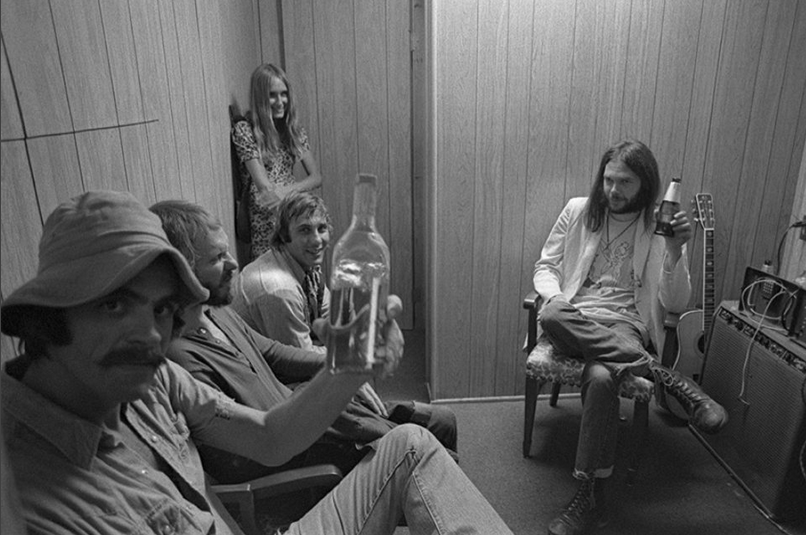
Even within the ink-soaked darkness of Tonight’s The Night, there were gleams of hope for an escape from the ditch. The final three songs of that album show signs of recovery and hope for Young. “Lookout Joe” and the reprise of the title track even sounds triumphant, bracing himself together and pushing through the pain towards a better future.  Still, his decaying relationship with his girlfriend and loads of other personal problems needed to be properly dealt with to fully heal himself. Thankfully, he had reached the point where musical sincerity flowed out of him organically, and now, he would use it to climb out of the depths of “the ditch.” Thus, On the Beach became the final chronological part of the “Ditch” album trilogy, detailing his journey out of depression on side two and returning to normal life on side one. Each part would be a phase in his emotional recovery, progressively coming to terms with his life until Young’s sound finally reflected a state of peace.

The title track immediately plummets listeners into the twilight zone of a dark psychedelic ocean. The hazy Wurlitzer piano mixed with the hand drum rhythm gives the song an unusual texture, a suffocating heaviness within the deeply personal sonic universe. Its slow, dreary funeral march allows the sound to sprawl over the 7 minutes with ease, sounding like Young is lost and alone within a cold, frigid expanse. The lyrics reflect that he is trapped within an icy internal world inside his own mind. Whether Young faces a crowd of people or a radio interviewer, he still finds himself alone at the microphone. The song gets its structure from the gloomy 12-bar blues tradition, but even then, it is unlike any blues ever performed; There’s no tough macho posing nor venting of frustration present in the song to be associated with the likes of Muddy Waters or Otis Rush. Instead, it is Young drowning himself in his negative thoughts to force himself to process the trauma he endured. Rather than fighting against them or succumbing to their lethal effects, he simply smothers his brain with the darkness to gain immunity to them, no matter how painful it may be.

Slowly and gradually, the effects of this internalization began to pay off on “Motion Pictures.” Finally adjusting his mental health to his chaotic life, Young, for the first time in his life, looked back at his life from an objective frame without losing emotional stability. Traces of sadness and bittersweet humor still linger, but under such a tranquil atmosphere with all those lazily slide guitar licks, they all fizzle away in the bliss of his dissociated state. He became a third-person observer of his own life, languidly sitting back and watching the motion pictures of his life flash by as he begins to make sense of it all. It’s in this numb clarity he becomes truly self-aware. The lyrics indicate Young finally understands that he doesn’t want to be like his self-absorbed peers, and he wouldn’t give a thing to be like any of them. He saw the aimless, peer-pressured trend hopping he had been doing for nearly half a decade and now wanted to end this unhealthy insecurity once and for all. Young was ready to make his way out.

The scars and hardship he endured would begin to heal in the final song, “Ambulance Blues.” The acoustic riff guiding the song has an incredibly complex sense of beauty, feeling as delicately warm as melancholically bittersweet. The singer was bringing himself to a state of peaceful acceptance, yet he was still torn internally. While there was a part of him that still struggled to deal with the events of his ditch period, his mind, body, and soul were ready to enter a whole new plane of existence, transforming into a person who was much more confident, stable, and self-assured. It was inevitable that his past self would have to die to allow for his own rebirth, but without the proper care, he would die a violent, anguished death that would linger on with him forever. This song would be Young’s compassion towards his former self in its final moments, allowing it to rest easy and pass without suffering. 

It’s not a surprise that the theme of death causes comparisons of “Ambulance Blues” to Dylan’s “Desolation Row,” but while Dylan used his song to find a common spiritual thread between the ordinary artifacts of our daily lives, Young’s epic folk ballad is recounting the deep contemplations during the last moments of a person’s life. The disjointed set of lyrics are snapshots of past memories, brief moments, or quotes that impacted and stayed with him throughout his life. Yet, there is no dichotomy of the good and bad or happy and sad present in these nostalgic ruminations. He was reaching a state of enlightenment where such differences did not exist: childhood, heartbreak, friendship, political distrust, disillusionment, optimism, the pain and beauty of life all belonged to the same cosmic order, and it was a precious privilege to experience all the facets of life, no matter the ups and downs that came with it. It was this realization of acceptance that renewed and brought him the greatest sense of strength imaginable, each soothing breath of his harmonica being a warm hug to his former self. His wounded soul began to mend as he exorcised his demons, and feeling stronger than ever, he took a deep breath and looked outside for the very first time.

However, the conclusion of his ditch period did not mark the end of his depression. As songs like “Revolution Blues” or breakup albums like Homegrown showed, he still had periods where difficult times returned and had much to deal with. The difference is that he was strong enough to never compromise himself for others anymore and could bring everything back into the big picture. A year after the ditch period, he released Zuma, American Stars ‘N Bars, and Comes a Time, albums that showed further developments of his more soulful and countrysides even if those styles were outdated by the late 70s. He was able to still create artistic works of epic proportion on his confident final LPs of the decade Rust Never Sleeps and Live Rust, albums where he channeled the collective disillusionment of his time to bring classic rock to a cathartic finish while pioneering grunge at the same time. For the rest of his career, he felt, at last, he was free to do anything he wanted artistically, and even if times got tough once more, he would have his guitar standing by him the whole way through.

It's through his period of despair and suffering that he realized that the chaos of life is not something to reject or fight but to embrace. No matter how much we might hate it, life is intrinsically chaotic, where times of great joy and pain will strike when least expected. It is easy to simply be reactionary and take everything based on face value alone. With the hardship Neil Young faced, he felt that being emotionally at the whim of chaos just isn’t a way to live life. For all the tragedies that he faced, his own music demonstrates that the world is so grand and magnificent, to the point where accepting defeat can only limit one’s ability to grow. Young tamed his own chaos and turned it into music that changed the lives of countless listeners in the process. It’s through unlocking the raw human spirit that we can find meaning in such a turbulent world, yet isn’t it this imperfect beauty that gives life meaning? All that’s clear is that as long as recording music is available, Neil Young’s classic period will serve as a testament to the sheer power of human strength to not only survive the toughest of circumstances but to turn pain into something tear-inducingly universalistic.

Atlantic/Stax Rhythm & Blues: Anytime, Anyplace, Anywhere – Joe Morris

Anytime, Anyplace, Anywhere – Joe Morris Orchestra Apple Music:   https://music.apple.com/us/album/anytime-anyplace-anywhere-remastered/4398...